

Tips and insights for parents and kids Consejos e ideas para padres e hijos 부모와 아이를 위한 팁과 인사이트
Bedtime Routine Songs: The Best Lullabies for Peaceful Sleep Canciones para Dormir: Las Mejores Canciones de Cuna para un Sueño Tranquilo 잠자리 루틴 노래: 평화로운 수면을 위한 최고의 자장가
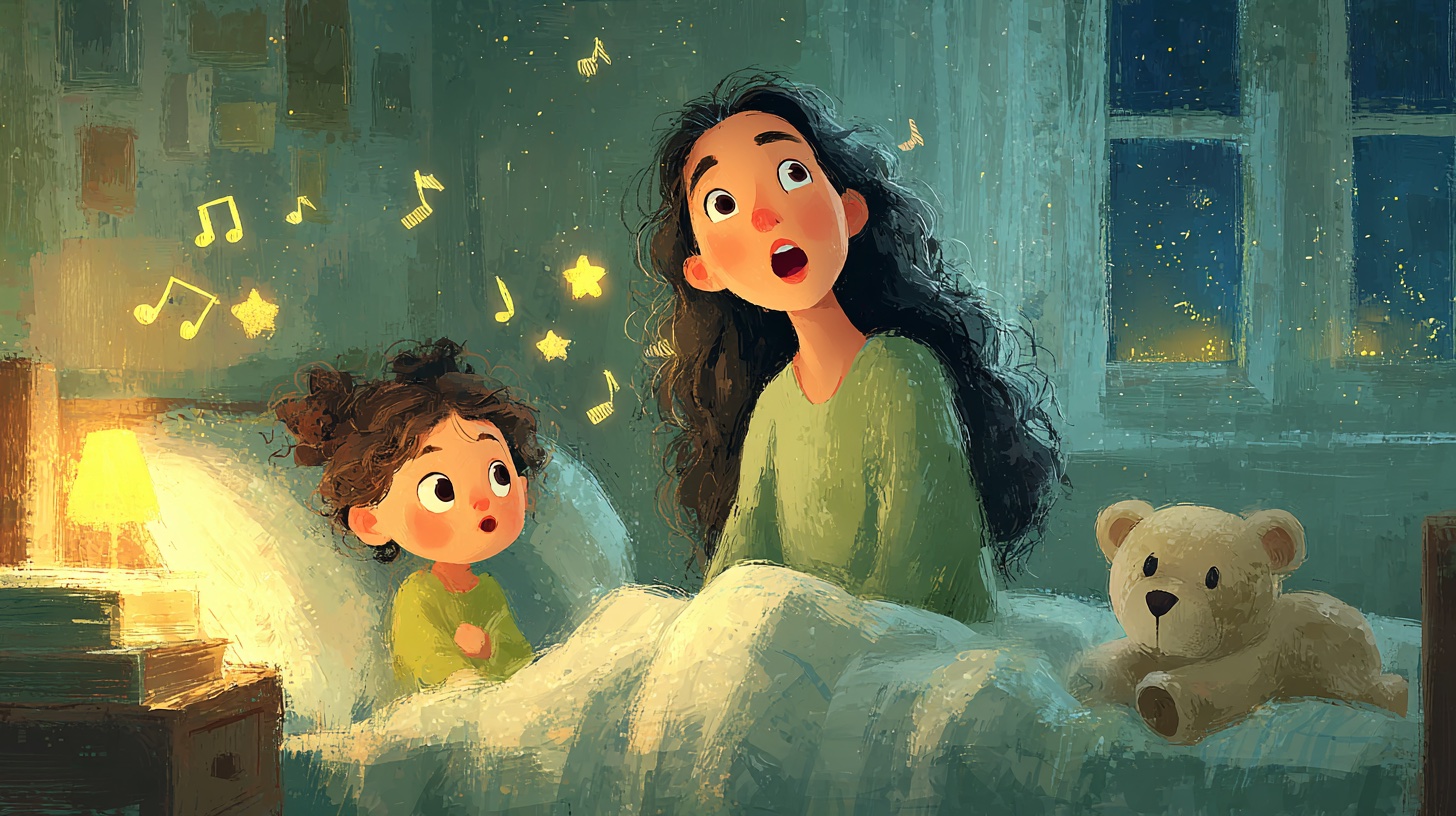
The American Academy of Pediatrics recommends consistent bedtime routines for optimal child development. Research shows lullabies reduce cortisol levels by up to 25%, lower heart rate, and help children fall asleep faster. We recommend 10 lullabies from English, Spanish, and Korean traditions, plus a science-backed 5-step bedtime routine that takes just 20-30 minutes. La Academia Americana de Pediatría recomienda rutinas nocturnas consistentes para el desarrollo óptimo del niño. Las investigaciones muestran que las canciones de cuna reducen los niveles de cortisol hasta un 25%, disminuyen la frecuencia cardíaca y ayudan a los niños a dormirse más rápido. Recomendamos 10 canciones de cuna de tradiciones en inglés, español y coreano, más una rutina nocturna de 5 pasos. 미국소아과학회(AAP)는 최적의 아동 발달을 위해 일관된 취침 루틴을 권장합니다. 연구에 따르면 자장가는 코르티솔 수치를 최대 25% 낮추고, 심박수를 감소시키며, 아이가 더 빨리 잠들도록 도와줍니다. 영어, 스페인어, 한국어 전통의 자장가 10곡과 20~30분이면 충분한 과학 기반 5단계 취침 루틴을 소개합니다.
Every parent knows the struggle: it's 8 PM, your child is overtired but wide awake, and the bedtime battle begins. You are not alone—25-50% of preschool-aged children experience sleep difficulties, according to the American Academy of Pediatrics (Mindell et al., 2006). But there is one tool that parents across every culture and century have relied on, and modern science confirms its effectiveness: the lullaby.
Research published in Pediatrics shows that consistent bedtime routines incorporating music lead to significantly improved sleep outcomes in children, including faster sleep onset, fewer night wakings, and longer total sleep duration (Mindell et al., 2015). In this guide, we explore the science behind lullabies, recommend 10 bedtime songs from around the world, and provide a step-by-step routine you can start tonight.
Sleep and Child Development: What the Research Says
Sleep is not merely rest—it is an active developmental process. During sleep, children's brains consolidate memories, process emotions, and release growth hormones essential for physical development. The AAP's clinical guidelines emphasize that adequate sleep is as important as nutrition and exercise for healthy child development.
Here's what the research shows about children's sleep needs:
| Age Group | Recommended Sleep (24 hours) | Source |
|---|---|---|
| Infants (4-12 months) | 12-16 hours | AAP/AASM, 2016 |
| Toddlers (1-2 years) | 11-14 hours | AAP/AASM, 2016 |
| Preschool (3-5 years) | 10-13 hours | AAP/AASM, 2016 |
| School age (6-12 years) | 9-12 hours | AAP/AASM, 2016 |
Insufficient sleep in children is linked to behavioral problems, impaired cognitive function, emotional dysregulation, and weakened immune response (Paavonen et al., 2009). A longitudinal study by Touchette et al. (2007) found that children who consistently slept less than recommended hours showed measurably lower cognitive performance at age 6, even after controlling for socioeconomic factors.
The Science of How Lullabies Promote Sleep
Lullabies work through multiple neurobiological mechanisms that prepare the body and brain for sleep:
1. Cortisol Reduction
A landmark study by Loewy et al. (2013) published in Pediatrics found that live lullaby singing reduced salivary cortisol (the stress hormone) by up to 25% in hospitalized infants. Lower cortisol directly facilitates the transition from wakefulness to sleep.
2. Heart Rate and Breathing Regulation
Lullabies across all cultures share a remarkable characteristic: a tempo of 60-80 beats per minute—matching the resting heart rate of a relaxed adult. Keith et al. (2009) demonstrated that infants exposed to this tempo showed synchronized heart rate deceleration, a physiological marker of the sleep onset process.
3. Oxytocin Release
When a parent sings to a child, both experience increased oxytocin levels—the bonding hormone. Feldman et al. (2010) showed that parent-child singing activates the same neurochemical pathways as skin-to-skin contact, creating feelings of safety and security that are prerequisites for sleep.
4. Predictability and Routine Signaling
The brain thrives on predictable patterns. When the same lullaby is sung each night, it becomes a conditioned sleep cue—a signal that tells the child's nervous system "it's time to wind down." Mindell et al. (2015) found that children with music-based bedtime routines fell asleep an average of 10 minutes faster than those without.
The Ideal 5-Step Bedtime Routine
Based on the AAP's recommendations and sleep research by Mindell et al. (2015), here is a 20-30 minute bedtime routine that maximizes sleep quality:
Step 1: Wind-Down Signal (5 minutes)
Dim the lights and turn off all screens at least 30 minutes before bedtime. The blue light from devices suppresses melatonin production by up to 50% (Chang et al., 2015). Instead, start quiet activities: puzzles, coloring, or gentle play.
Step 2: Bath or Wash (5-10 minutes)
A warm bath raises core body temperature slightly. When the child exits the bath, the subsequent temperature drop triggers drowsiness—a physiological process called thermoregulation that naturally promotes sleep onset (Haghayegh et al., 2019).
Step 3: Pajamas and Comfort Object (2-3 minutes)
Putting on pajamas is another ritual cue that signals "bedtime is coming." A comfort object (stuffed animal, blanket) provides tactile security that reduces separation anxiety.
Step 4: Story or Quiet Talk (5-10 minutes)
Reading or quiet conversation strengthens the parent-child bond while gently engaging the mind without the stimulation of active play. Choose calm, repetitive stories—not exciting adventures.
Step 5: Lullaby (3-5 minutes)
The final step. Singing 1-2 lullabies provides the ultimate sleep transition. Your voice, the familiar melody, and the gentle rhythm combine to create the perfect conditions for sleep. It doesn't matter if you can't carry a tune—your child's brain responds to the emotional connection, not musical perfection (Trehub, 2001).
10 Best Lullabies from Around the World
Every culture has its own lullaby tradition, and each offers unique qualities. Here are 10 lullabies from English, Spanish, and Korean traditions—perfect for multicultural families or anyone who wants to share the world's most beautiful bedtime music with their children.
English Lullabies
1. "Twinkle, Twinkle, Little Star"
Origin: English poem by Jane Taylor (1806), melody from French folk song
Perhaps the world's most recognized lullaby. Its gentle ascending and descending melody naturally mirrors the breathing pattern of falling asleep. The simple vocabulary makes it perfect for infants through preschoolers.
2. "Brahms' Lullaby (Lullaby and Goodnight)"
Origin: Johannes Brahms, 1868 (Germany)
Composed at a tempo of exactly 66 BPM—matching the ideal sleep-inducing heart rate. The triple meter (3/4 time) creates a gentle rocking sensation. Research by Standley (2002) found this lullaby to be among the most effective for reducing infant stress in clinical settings.
3. "Rock-a-Bye Baby"
Origin: Traditional English, first published 1765
The rocking motion described in the lyrics corresponds to vestibular stimulation—gentle movement that activates the inner ear's balance system, which research shows promotes sleepiness in infants (Bayer et al., 2012).
Spanish Lullabies
4. "Arrorró Mi Niño"
Origin: Traditional Latin American lullaby, widely beloved in Mexico
This gentle song ("Hush, my child") uses repetitive, flowing phrases that create a meditative quality. The word "arrorró" itself is an onomatopoeia for the rocking sound, connecting language, motion, and sleep.
5. "Duérmete Mi Niño"
Origin: Traditional Spanish lullaby, popular across Latin America
The direct command "Sleep, my child" combined with gentle melodic contours creates a soothing verbal-musical instruction. Many Latin American families add personalized verses, making it a vehicle for family storytelling.
6. "Estrellita, ¿Dónde Estás?"
Origin: Spanish adaptation of "Twinkle, Twinkle, Little Star"
The question format ("Little star, where are you?") engages the child's imagination while the familiar melody provides comfort. Bilingual families can alternate between English and Spanish verses, reinforcing both languages at bedtime.
7. "Los Pollitos Dicen"
Origin: Traditional Latin American children's song, popular as a lullaby in Mexico
Though often sung as a daytime song, the verses about baby chicks being cared for by their mother create a natural metaphor for parental protection at bedtime. The gentle melody and simple lyrics make it ideal for the youngest children.
Korean Lullabies
8. "섬집 아기 (Island Baby)"
Origin: Korean traditional lullaby
This beloved Korean lullaby tells the story of a baby sleeping on a small island while their mother goes to the sea. The gentle wave-like melody mimics ocean rhythms, creating a naturally soothing effect that connects to Korea's maritime heritage.
9. "자장가 (Jajangga)"
Origin: Traditional Korean lullaby, passed down through generations
The word "자장자장" (ja-jang-ja-jang) is Korea's equivalent of "hush" or "lullaby." The repetitive, rhythmic chanting creates a mantra-like quality that naturally induces drowsiness. Generations of Korean parents have used this simple, powerful melody.
10. "반달 (Half Moon)"
Origin: Written by Yun Geuk-young (1924), one of Korea's most famous children's songs
This song imagines a rabbit on the half moon, weaving a dream-like narrative. The 3/4 waltz rhythm creates a gentle swaying sensation that mirrors rocking. Though technically a children's song rather than a lullaby, Korean families have used it as a bedtime song for a century.
You can find English and Spanish versions of many classic children's songs on the HiDino English channel and HiDino Spanish channel, including gentle versions perfect for bedtime.
Creating the Perfect Sleep Environment
Lullabies work best when the environment supports sleep. Based on the AAP's safe sleep guidelines and sleep hygiene research:
- Temperature: Keep the room between 65-70°F (18-21°C). A slightly cool room promotes better sleep (National Sleep Foundation).
- Darkness: Use blackout curtains. Even small amounts of light can suppress melatonin production and disrupt sleep cycles.
- White noise vs. lullabies: White noise is effective for maintaining sleep, while lullabies are more effective for sleep onset. Consider playing a lullaby playlist during the routine, then switching to white noise for the night.
- Consistency: Go to bed at the same time every night, including weekends. The circadian system responds to regularity—even a 30-minute variation can disrupt sleep quality (Mindell et al., 2015).
For more about how music supports your child's brain development beyond sleep, see our comprehensive guide: Music and Your Child's Brain: What Science Tells Us.
To learn about managing screen time effectively—especially before bed—check out our guide: Managing Screen Time for Children.
For age-appropriate educational content recommendations, visit: Learning Content for Ages 2-4.
Todo padre conoce la lucha: son las 8 PM, tu hijo está demasiado cansado pero completamente despierto, y comienza la batalla de la hora de dormir. No estás solo—entre el 25% y el 50% de los niños en edad preescolar experimentan dificultades para dormir, según la Academia Americana de Pediatría (Mindell et al., 2006). Pero hay una herramienta en la que padres de todas las culturas y siglos han confiado, y la ciencia moderna confirma su efectividad: la canción de cuna.
Investigaciones publicadas en Pediatrics muestran que las rutinas nocturnas consistentes que incorporan música conducen a resultados de sueño significativamente mejores en los niños, incluyendo un inicio del sueño más rápido, menos despertares nocturnos y mayor duración total del sueño (Mindell et al., 2015). En esta guía, exploramos la ciencia detrás de las canciones de cuna, recomendamos 10 canciones para dormir de todo el mundo y proporcionamos una rutina paso a paso que puedes empezar esta noche.
Sueño y Desarrollo Infantil: Lo que Dice la Investigación
El sueño no es simplemente descanso—es un proceso de desarrollo activo. Durante el sueño, los cerebros de los niños consolidan memorias, procesan emociones y liberan hormonas de crecimiento esenciales para el desarrollo físico. Las guías clínicas de la AAP enfatizan que el sueño adecuado es tan importante como la nutrición y el ejercicio para el desarrollo saludable del niño.
Esto es lo que muestra la investigación sobre las necesidades de sueño de los niños:
| Grupo de Edad | Sueño Recomendado (24 horas) | Fuente |
|---|---|---|
| Bebés (4-12 meses) | 12-16 horas | AAP/AASM, 2016 |
| Niños pequeños (1-2 años) | 11-14 horas | AAP/AASM, 2016 |
| Preescolar (3-5 años) | 10-13 horas | AAP/AASM, 2016 |
| Edad escolar (6-12 años) | 9-12 horas | AAP/AASM, 2016 |
El sueño insuficiente en niños está vinculado a problemas de comportamiento, función cognitiva deteriorada, desregulación emocional y respuesta inmune debilitada (Paavonen et al., 2009). Un estudio longitudinal de Touchette et al. (2007) encontró que los niños que consistentemente dormían menos de las horas recomendadas mostraron un rendimiento cognitivo mediblemente menor a los 6 años, incluso después de controlar factores socioeconómicos.
La Ciencia de Cómo las Canciones de Cuna Promueven el Sueño
Las canciones de cuna funcionan a través de múltiples mecanismos neurobiológicos que preparan el cuerpo y el cerebro para dormir:
1. Reducción del Cortisol
Un estudio de referencia de Loewy et al. (2013) publicado en Pediatrics encontró que el canto en vivo de canciones de cuna redujo el cortisol salival (la hormona del estrés) hasta un 25% en bebés hospitalizados. Un cortisol más bajo facilita directamente la transición de la vigilia al sueño.
2. Regulación de la Frecuencia Cardíaca y la Respiración
Las canciones de cuna de todas las culturas comparten una característica notable: un tempo de 60-80 latidos por minuto—coincidiendo con la frecuencia cardíaca en reposo de un adulto relajado. Keith et al. (2009) demostraron que los bebés expuestos a este tempo mostraron desaceleración sincronizada de la frecuencia cardíaca, un marcador fisiológico del proceso de inicio del sueño.
3. Liberación de Oxitocina
Cuando un padre canta a su hijo, ambos experimentan niveles aumentados de oxitocina—la hormona del vínculo. Feldman et al. (2010) mostraron que el canto padre-hijo activa las mismas vías neuroquímicas que el contacto piel con piel, creando sentimientos de seguridad que son prerrequisitos para el sueño.
4. Previsibilidad y Señalización de Rutina
El cerebro prospera con patrones predecibles. Cuando la misma canción de cuna se canta cada noche, se convierte en una señal condicionada de sueño—una señal que le dice al sistema nervioso del niño "es hora de relajarse." Mindell et al. (2015) encontraron que los niños con rutinas nocturnas basadas en música se dormían en promedio 10 minutos más rápido que aquellos sin ellas.
La Rutina Nocturna Ideal de 5 Pasos
Basada en las recomendaciones de la AAP y la investigación del sueño de Mindell et al. (2015), aquí hay una rutina nocturna de 20-30 minutos que maximiza la calidad del sueño:
Paso 1: Señal de Relajación (5 minutos)
Baja la intensidad de las luces y apaga todas las pantallas al menos 30 minutos antes de acostarse. La luz azul de los dispositivos suprime la producción de melatonina hasta un 50% (Chang et al., 2015). En su lugar, comienza actividades tranquilas: rompecabezas, colorear o juego suave.
Paso 2: Baño o Lavado (5-10 minutos)
Un baño tibio eleva ligeramente la temperatura corporal central. Cuando el niño sale del baño, la posterior caída de temperatura desencadena somnolencia—un proceso fisiológico llamado termorregulación que promueve naturalmente el inicio del sueño (Haghayegh et al., 2019).
Paso 3: Pijama y Objeto de Confort (2-3 minutos)
Ponerse la pijama es otra señal ritual que indica "la hora de dormir se acerca." Un objeto de confort (peluche, cobija) proporciona seguridad táctil que reduce la ansiedad por separación.
Paso 4: Cuento o Conversación Tranquila (5-10 minutos)
Leer o conversar tranquilamente fortalece el vínculo padre-hijo mientras estimula suavemente la mente sin la excitación del juego activo. Elige historias calmadas y repetitivas—no aventuras emocionantes.
Paso 5: Canción de Cuna (3-5 minutos)
El paso final. Cantar 1-2 canciones de cuna proporciona la transición definitiva al sueño. Tu voz, la melodía familiar y el ritmo suave se combinan para crear las condiciones perfectas para dormir. No importa si no cantas bien—el cerebro de tu hijo responde a la conexión emocional, no a la perfección musical (Trehub, 2001).
10 Mejores Canciones de Cuna del Mundo
Cada cultura tiene su propia tradición de canciones de cuna, y cada una ofrece cualidades únicas. Aquí hay 10 canciones de tradiciones en inglés, español y coreano—perfectas para familias multiculturales o cualquiera que quiera compartir la música más hermosa del mundo con sus hijos.
Canciones de Cuna en Inglés
1. "Twinkle, Twinkle, Little Star"
Origen: Poema inglés de Jane Taylor (1806), melodía de canción popular francesa
Quizás la canción de cuna más reconocida del mundo. Su melodía suave ascendente y descendente refleja naturalmente el patrón de respiración al quedarse dormido. El vocabulario simple la hace perfecta desde bebés hasta preescolares.
2. "Canción de Cuna de Brahms"
Origen: Johannes Brahms, 1868 (Alemania)
Compuesta a un tempo de exactamente 66 BPM—coincidiendo con la frecuencia cardíaca ideal para inducir el sueño. El compás ternario (3/4) crea una suave sensación de mecido. La investigación de Standley (2002) encontró que esta canción de cuna es una de las más efectivas para reducir el estrés infantil en entornos clínicos.
3. "Rock-a-Bye Baby"
Origen: Tradicional inglesa, publicada por primera vez en 1765
El movimiento de mecido descrito en la letra corresponde a la estimulación vestibular—movimiento suave que activa el sistema de equilibrio del oído interno, que las investigaciones muestran que promueve la somnolencia en los bebés (Bayer et al., 2012).
Canciones de Cuna en Español
4. "Arrorró Mi Niño"
Origen: Canción de cuna tradicional latinoamericana, muy querida en México
Esta suave canción usa frases repetitivas y fluidas que crean una cualidad meditativa. La palabra "arrorró" en sí misma es una onomatopeya del sonido de mecer, conectando lenguaje, movimiento y sueño.
5. "Duérmete Mi Niño"
Origen: Canción de cuna tradicional española, popular en toda Latinoamérica
La instrucción directa "Duérmete, mi niño" combinada con contornos melódicos suaves crea una instrucción verbal-musical calmante. Muchas familias latinoamericanas agregan versos personalizados, convirtiéndola en un vehículo para contar historias familiares.
6. "Estrellita, ¿Dónde Estás?"
Origen: Adaptación española de "Twinkle, Twinkle, Little Star"
El formato de pregunta ("Estrellita, ¿dónde estás?") involucra la imaginación del niño mientras la melodía familiar proporciona confort. Las familias bilingües pueden alternar entre versos en inglés y español, reforzando ambos idiomas a la hora de dormir.
7. "Los Pollitos Dicen"
Origen: Canción infantil tradicional latinoamericana, popular como canción de cuna en México
Aunque frecuentemente se canta de día, los versos sobre pollitos cuidados por su madre crean una metáfora natural de la protección parental a la hora de dormir. La melodía suave y las letras simples la hacen ideal para los más pequeños.
Canciones de Cuna en Coreano
8. "섬집 아기 (Bebé de la Isla)"
Origen: Canción de cuna tradicional coreana
Esta querida canción de cuna coreana cuenta la historia de un bebé durmiendo en una pequeña isla mientras su madre va al mar. La suave melodía ondulante imita los ritmos del océano, creando un efecto naturalmente calmante que conecta con la herencia marítima de Corea.
9. "자장가 (Jajangga)"
Origen: Canción de cuna tradicional coreana, transmitida por generaciones
La palabra "자장자장" (ja-jang-ja-jang) es el equivalente coreano de "arrorró." El canto repetitivo y rítmico crea una cualidad similar a un mantra que induce naturalmente la somnolencia. Generaciones de padres coreanos han usado esta melodía simple y poderosa.
10. "반달 (Media Luna)"
Origen: Escrita por Yun Geuk-young (1924), una de las canciones infantiles más famosas de Corea
Esta canción imagina un conejo en la media luna, tejiendo una narrativa onírica. El ritmo de vals en 3/4 crea una suave sensación de balanceo que imita el mecido. Aunque técnicamente es una canción infantil más que una canción de cuna, las familias coreanas la han usado para dormir durante un siglo.
Puedes encontrar versiones en inglés y español de muchas canciones infantiles clásicas en el canal de HiDino en inglés y el canal de HiDino en español, incluyendo versiones suaves perfectas para la hora de dormir.
Creando el Ambiente Perfecto para Dormir
Las canciones de cuna funcionan mejor cuando el ambiente apoya el sueño. Según las guías de sueño seguro de la AAP y la investigación sobre higiene del sueño:
- Temperatura: Mantén la habitación entre 18-21°C. Una habitación ligeramente fresca promueve un mejor sueño (National Sleep Foundation).
- Oscuridad: Usa cortinas blackout. Incluso pequeñas cantidades de luz pueden suprimir la producción de melatonina y alterar los ciclos de sueño.
- Ruido blanco vs. canciones de cuna: El ruido blanco es efectivo para mantener el sueño, mientras que las canciones de cuna son más efectivas para el inicio del sueño. Considera reproducir una playlist de canciones de cuna durante la rutina, luego cambiar a ruido blanco para la noche.
- Consistencia: Acuéstate a la misma hora cada noche, incluyendo fines de semana. El sistema circadiano responde a la regularidad—incluso una variación de 30 minutos puede alterar la calidad del sueño (Mindell et al., 2015).
Para más información sobre cómo la música apoya el desarrollo cerebral de tu hijo más allá del sueño, consulta nuestra guía completa: La Música y el Cerebro de Tu Hijo: Lo que Dice la Ciencia.
Para aprender sobre el manejo efectivo del tiempo de pantalla—especialmente antes de dormir—consulta nuestra guía: Manejo del Tiempo de Pantalla para Niños.
Para recomendaciones de contenido educativo apropiado por edad, visita: Contenido Educativo para Edades 2-4.
모든 부모가 알고 있는 그 고군분투: 저녁 8시, 아이는 과도하게 피곤하면서도 완전히 깨어 있고, 취침 전쟁이 시작됩니다. 당신만 그런 것이 아닙니다—미국소아과학회(AAP)에 따르면, 취학 전 아동의 25~50%가 수면 어려움을 경험합니다(Mindell et al., 2006). 하지만 모든 문화와 세기에 걸쳐 부모들이 의지해 온 도구가 하나 있으며, 현대 과학이 그 효과를 확인합니다: 바로 자장가입니다.
Pediatrics에 발표된 연구는 음악을 포함한 일관된 취침 루틴이 아이들의 수면 결과를 유의미하게 개선한다는 것을 보여줍니다—더 빠른 수면 시작, 더 적은 야간 각성, 더 긴 총 수면 시간 (Mindell et al., 2015). 이 가이드에서는 자장가 뒤의 과학을 탐구하고, 전 세계 10곡의 취침 노래를 추천하며, 오늘 밤부터 시작할 수 있는 단계별 루틴을 제공합니다.
수면과 아동 발달: 연구가 말하는 것
수면은 단순한 휴식이 아닙니다—능동적인 발달 과정입니다. 수면 중 아이의 뇌는 기억을 공고화하고, 감정을 처리하며, 신체 발달에 필수적인 성장 호르몬을 분비합니다. AAP의 임상 가이드라인은 적절한 수면이 건강한 아동 발달을 위해 영양과 운동만큼 중요하다고 강조합니다.
아동 수면 필요량에 대한 연구 결과입니다:
| 연령대 | 권장 수면 시간(24시간) | 출처 |
|---|---|---|
| 영아 (4-12개월) | 12-16시간 | AAP/AASM, 2016 |
| 유아 (1-2세) | 11-14시간 | AAP/AASM, 2016 |
| 취학 전 (3-5세) | 10-13시간 | AAP/AASM, 2016 |
| 학령기 (6-12세) | 9-12시간 | AAP/AASM, 2016 |
아이의 수면 부족은 행동 문제, 인지 기능 저하, 정서 조절 장애, 면역 반응 약화와 관련됩니다(Paavonen et al., 2009). Touchette et al.(2007)의 종단 연구는 권장 시간보다 지속적으로 적게 잔 아이들이 6세에 측정 가능하게 낮은 인지 수행을 보였다는 것을 발견했습니다—사회경제적 요인을 통제한 후에도.
자장가가 수면을 촉진하는 과학적 원리
자장가는 몸과 뇌를 수면에 준비시키는 여러 신경생물학적 메커니즘을 통해 작용합니다:
1. 코르티솔 감소
Loewy et al.(2013)이 Pediatrics에 발표한 획기적인 연구는 라이브 자장가 노래가 입원 중인 영아의 타액 코르티솔(스트레스 호르몬)을 최대 25% 감소시켰다는 것을 발견했습니다. 낮은 코르티솔은 각성에서 수면으로의 전환을 직접 촉진합니다.
2. 심박수 및 호흡 조절
모든 문화의 자장가는 놀라운 공통점을 공유합니다: 분당 60-80박자의 템포—편안한 성인의 안정시 심박수와 일치합니다. Keith et al.(2009)은 이 템포에 노출된 영아가 동기화된 심박수 감속을 보였다는 것을 입증했습니다—수면 시작 과정의 생리적 지표입니다.
3. 옥시토신 분비
부모가 아이에게 노래할 때, 둘 다 옥시토신 수치 증가를 경험합니다—유대 호르몬입니다. Feldman et al.(2010)은 부모-자녀 노래가 피부 대 피부 접촉과 동일한 신경화학적 경로를 활성화하여 수면의 전제 조건인 안전감과 안정감을 만든다는 것을 보여주었습니다.
4. 예측 가능성과 루틴 신호
뇌는 예측 가능한 패턴에서 번성합니다. 매일 밤 같은 자장가를 부르면, 그것은 조건화된 수면 신호가 됩니다—아이의 신경계에 "이제 긴장을 풀 시간"이라고 알리는 신호입니다. Mindell et al.(2015)은 음악 기반 취침 루틴을 가진 아이들이 그렇지 않은 아이들보다 평균 10분 더 빨리 잠들었다는 것을 발견했습니다.
이상적인 5단계 취침 루틴
AAP의 권고와 Mindell et al.(2015)의 수면 연구를 기반으로, 수면의 질을 극대화하는 20-30분 취침 루틴입니다:
1단계: 긴장 이완 신호 (5분)
취침 최소 30분 전에 조명을 줄이고 모든 화면을 끄세요. 기기의 블루라이트는 멜라토닌 생산을 최대 50% 억제합니다(Chang et al., 2015). 대신 조용한 활동을 시작하세요: 퍼즐, 색칠하기, 또는 부드러운 놀이.
2단계: 목욕 또는 세수 (5-10분)
따뜻한 목욕은 핵심 체온을 약간 올립니다. 아이가 목욕에서 나오면, 이후의 체온 하락이 졸음을 유발합니다—자연적으로 수면 시작을 촉진하는 체온 조절이라는 생리적 과정입니다(Haghayegh et al., 2019).
3단계: 잠옷과 안정 물건 (2-3분)
잠옷을 입는 것은 "잠자리 시간이 다가오고 있다"는 또 다른 의식적 신호입니다. 안정 물건(인형, 담요)은 분리 불안을 줄이는 촉각적 안전감을 제공합니다.
4단계: 이야기 또는 조용한 대화 (5-10분)
읽기나 조용한 대화는 활동적 놀이의 자극 없이 부드럽게 마음을 자극하면서 부모-자녀 유대를 강화합니다. 차분하고 반복적인 이야기를 선택하세요—흥미진진한 모험이 아닌.
5단계: 자장가 (3-5분)
마지막 단계. 1-2곡의 자장가를 부르면 궁극적인 수면 전환을 제공합니다. 당신의 목소리, 익숙한 멜로디, 부드러운 리듬이 결합하여 수면에 완벽한 조건을 만듭니다. 노래를 잘 못해도 걱정하지 마세요—아이의 뇌는 음악적 완벽함이 아닌 감정적 연결에 반응합니다(Trehub, 2001).
전 세계 최고의 자장가 10곡
모든 문화에는 고유한 자장가 전통이 있으며, 각각 독특한 특성을 제공합니다. 영어, 스페인어, 한국어 전통의 자장가 10곡을 소개합니다—다문화 가정이나 세계에서 가장 아름다운 취침 음악을 아이와 나누고 싶은 모든 분에게 완벽합니다.
영어 자장가
1. "Twinkle, Twinkle, Little Star (반짝반짝 작은 별)"
유래: Jane Taylor의 영시(1806), 프랑스 민요 멜로디
아마도 세계에서 가장 많이 알려진 자장가입니다. 부드럽게 오르내리는 멜로디가 자연스럽게 잠들 때의 호흡 패턴을 반영합니다. 간단한 어휘로 영아부터 취학 전 아동까지 완벽합니다.
2. "브람스의 자장가 (Lullaby and Goodnight)"
유래: 요하네스 브람스, 1868년 (독일)
정확히 66 BPM의 템포로 작곡되어—수면 유도에 이상적인 심박수와 일치합니다. 3/4 박자의 셋잇단음은 부드러운 흔들림 감각을 만듭니다. Standley(2002)의 연구는 이 자장가가 임상 환경에서 영아 스트레스 감소에 가장 효과적인 곡 중 하나임을 발견했습니다.
3. "Rock-a-Bye Baby"
유래: 영국 전통, 1765년 처음 출판
가사에 묘사된 흔들림 동작은 전정 자극에 해당합니다—내이의 균형 시스템을 활성화하는 부드러운 움직임으로, 연구에 따르면 영아의 졸음을 촉진합니다(Bayer et al., 2012).
스페인어 자장가
4. "Arrorró Mi Niño (아로로 내 아이)"
유래: 라틴아메리카 전통 자장가, 멕시코에서 특히 사랑받음
"쉿, 내 아이야"라는 이 부드러운 노래는 반복적이고 흐르는 문구를 사용하여 명상적인 특성을 만듭니다. "arrorró"라는 단어 자체가 흔드는 소리의 의성어로, 언어, 움직임, 수면을 연결합니다.
5. "Duérmete Mi Niño (자거라 내 아이)"
유래: 스페인 전통 자장가, 라틴아메리카 전역에서 인기
"자거라, 내 아이야"라는 직접적 명령과 부드러운 멜로디 윤곽이 결합하여 차분한 언어-음악적 지시를 만듭니다. 많은 라틴아메리카 가정이 개인화된 절을 추가하여 가족 이야기를 전하는 수단으로 활용합니다.
6. "Estrellita, ¿Dónde Estás? (작은 별아, 어디 있니?)"
유래: "Twinkle, Twinkle, Little Star"의 스페인어 번안
질문 형식이 아이의 상상력을 자극하면서 익숙한 멜로디가 안정감을 제공합니다. 이중언어 가정은 영어와 스페인어 절을 번갈아 부를 수 있어, 취침 시간에 두 언어를 강화합니다.
7. "Los Pollitos Dicen (병아리들이 말해요)"
유래: 라틴아메리카 전통 동요, 멕시코에서 자장가로 인기
주로 낮에 부르는 노래지만, 어미 닭이 병아리를 돌보는 가사가 취침 시간 부모의 보호라는 자연스러운 은유를 만듭니다. 부드러운 멜로디와 간단한 가사로 가장 어린 아이에게 이상적입니다.
한국어 자장가
8. "섬집 아기"
유래: 한국 전통 자장가
이 사랑받는 한국 자장가는 엄마가 바다에 간 사이 작은 섬에서 잠든 아기의 이야기를 담고 있습니다. 부드러운 파도 같은 멜로디가 바다 리듬을 모방하여, 한국의 해양 유산과 연결되는 자연스럽게 진정되는 효과를 만듭니다.
9. "자장가 (자장자장)"
유래: 한국 전통 자장가, 세대를 거쳐 전해짐
"자장자장"이라는 말은 한국어로 "쉿" 또는 "자장가"에 해당합니다. 반복적이고 리듬감 있는 읊조림이 자연스럽게 졸음을 유도하는 만트라 같은 특성을 만듭니다. 수 세대의 한국 부모들이 이 단순하지만 강력한 멜로디를 사용해 왔습니다.
10. "반달"
유래: 윤극영 작곡(1924), 한국에서 가장 유명한 동요 중 하나
이 노래는 반달 위의 토끼를 상상하며 꿈같은 서사를 엮어갑니다. 3/4 왈츠 리듬이 부드러운 흔들림 감각을 만들어 요람을 흔드는 것과 유사합니다. 엄밀히는 동요이지만, 한국 가정에서는 한 세기 동안 취침 노래로 사용해 왔습니다.
클래식 어린이 노래의 영어와 스페인어 버전은 HiDino 영어 채널과 HiDino 스페인어 채널에서 찾을 수 있으며, 취침 시간에 완벽한 부드러운 버전도 포함되어 있습니다.
완벽한 수면 환경 만들기
자장가는 환경이 수면을 지원할 때 가장 잘 작용합니다. AAP의 안전 수면 가이드라인과 수면 위생 연구를 기반으로:
- 온도: 방 온도를 18-21°C로 유지하세요. 약간 서늘한 방이 더 좋은 수면을 촉진합니다(미국수면재단).
- 어둠: 암막 커튼을 사용하세요. 작은 양의 빛도 멜라토닌 생산을 억제하고 수면 주기를 방해할 수 있습니다.
- 백색소음 vs. 자장가: 백색소음은 수면 유지에 효과적이고, 자장가는 수면 시작에 더 효과적입니다. 루틴 중에는 자장가 플레이리스트를, 밤에는 백색소음으로 전환하는 것을 고려하세요.
- 일관성: 주말 포함 매일 같은 시간에 취침하세요. 생체 리듬은 규칙성에 반응합니다—30분의 변동만으로도 수면 질이 저하될 수 있습니다(Mindell et al., 2015).
수면 너머 음악이 아이의 뇌 발달을 어떻게 지원하는지에 대해서는 종합 가이드를 확인하세요: 음악과 아이의 뇌: 과학이 밝히는 놀라운 연결고리.
특히 취침 전 스크린 타임을 효과적으로 관리하는 방법은: 아이의 스크린 타임 관리하기.
연령에 맞는 교육 콘텐츠 추천은: 2-4세를 위한 학습 콘텐츠.

Comments Comentarios 댓글
No comments yet. Be the first! Aún no hay comentarios. ¡Sé el primero! 아직 댓글이 없습니다. 첫 번째로 작성해보세요!
Leave a comment Deja un comentario 댓글 남기기