

Tips and insights for parents and kids Consejos e ideas para padres e hijos 부모와 아이를 위한 팁과 인사이트
Teaching Counting Through Songs: 12 Best Number Songs for Kids Enseñando a Contar con Canciones: 12 Mejores Canciones de Números para Niños 노래로 배우는 숫자와 셈하기: 어린이를 위한 최고의 숫자 노래 12곡
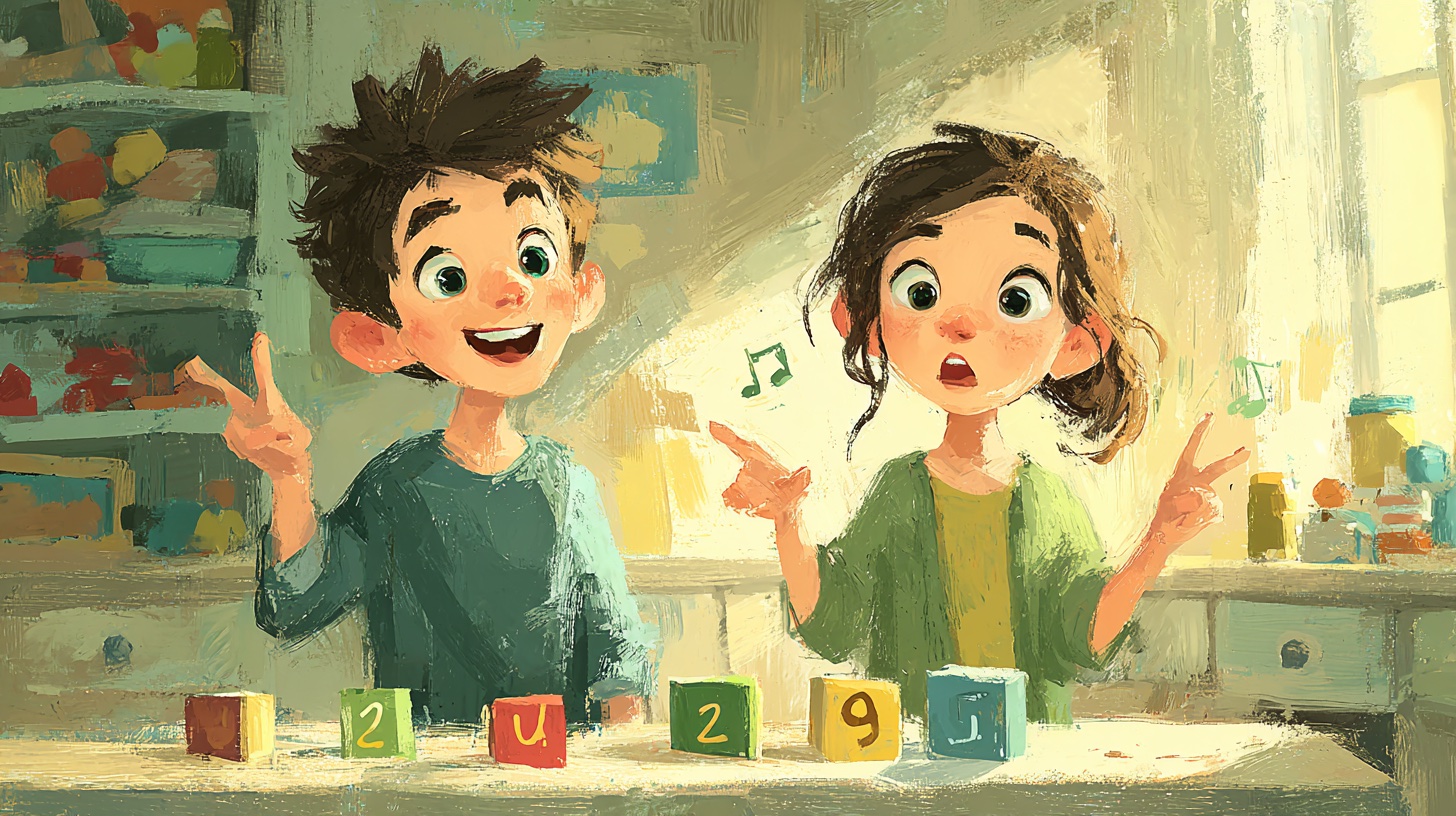
Songs are one of the most effective tools for teaching children to count, with research showing music-based math instruction improves number skills by up to 34% compared to traditional methods (Geist et al., 2012). This guide presents 12 carefully selected counting songs across three levels—basic counting (1-10), addition and subtraction concepts, and advanced number patterns—along with hands-on activities parents can pair with each song. Las canciones son una de las herramientas más efectivas para enseñar a los niños a contar, con investigaciones que muestran que la instrucción matemática basada en música mejora las habilidades numéricas hasta un 34% en comparación con métodos tradicionales (Geist et al., 2012). Esta guía presenta 12 canciones de conteo cuidadosamente seleccionadas en tres niveles, junto con actividades prácticas. 노래는 아이들에게 숫자를 가르치는 가장 효과적인 도구 중 하나입니다. 연구에 따르면 음악 기반 수학 교육은 전통적 방법 대비 숫자 능력을 최대 34% 향상시킵니다(Geist et al., 2012). 이 가이드는 기초 셈하기부터 고급 숫자 패턴까지 3단계로 구성된 12곡의 숫자 노래와 각 노래에 맞는 실전 활동을 소개합니다.
Why Songs Are the Best Way to Teach Counting
If you've ever watched a child effortlessly memorize the lyrics to a song but struggle to remember a simple list, you already understand the remarkable power of music on memory. Research confirms what parents and teachers have long observed: music and mathematics share deep neural connections that make songs an exceptionally effective tool for teaching numbers.
A landmark study by Geist, Geist, and Kuznik (2012) found that children who learned counting through musical activities scored 34% higher on number recognition tests than those taught through conventional methods. The explanation lies in how our brains process music and math—both activate overlapping regions in the prefrontal cortex and parietal lobe, creating stronger neural pathways when combined (Spelke, 2008).
The Science Behind Musical Counting
- Rhythmic patterns mirror number patterns: The steady beat in counting songs helps children internalize the ordinal sequence of numbers (1, 2, 3...) through predictable rhythmic structures (Clements & Sarama, 2014)
- Repetition without boredom: Children willingly repeat songs dozens of times, providing the 8-15 repetitions needed to move counting from short-term to long-term memory
- Multisensory engagement: Combining singing (auditory), finger counting (kinesthetic), and visual cues activates 3x more neural pathways than recitation alone (Shams & Seitz, 2008)
- Emotional encoding: Music triggers dopamine release, making number learning a positive emotional experience that children want to repeat
- Cross-language transfer: Number concepts learned through songs transfer across languages—bilingual children learning counting songs in both English and Spanish demonstrate enhanced numerical understanding in both languages
According to the National Council of Teachers of Mathematics (NCTM), number sense developed before age 6 is one of the strongest predictors of later academic success—more predictive than reading skills or attention span (Jordan et al., 2009). Songs provide a joyful, accessible pathway to build this critical foundation.
Basic Counting Songs: Numbers 1-10
These four songs establish the foundational counting sequence that every child needs. Each song approaches counting from a different angle, reinforcing number recognition through varied contexts.
| Song | Number Range | Key Skill | Best Age |
|---|---|---|---|
| One, Two, Buckle My Shoe | 1-20 | Sequential counting + rhyming pairs | 2-4 |
| Five Little Ducks | 5-0 (countdown) | Counting backward + subtraction preview | 2-5 |
| Ten in the Bed | 10-1 | Reverse counting + one-less concept | 3-5 |
| This Old Man | 1-10 | Ordinal counting + rhyming | 3-5 |
1. One, Two, Buckle My Shoe
This classic rhyme pairs numbers with concrete actions, helping children connect abstract numbers to physical activities. Research by Mix et al. (2012) shows that this number-action pairing is especially effective for children aged 2-4, when they learn best through embodied cognition—understanding concepts through physical experience.
2. Five Little Ducks
This song naturally introduces counting backward—a skill that many children find significantly harder than counting forward. The narrative structure (ducks going away one at a time) provides a concrete, visual model for the abstract concept of "one less." Studies show that backward counting proficiency at age 4 is a strong predictor of future mathematical success (Siegler & Ramani, 2009).
3. Ten in the Bed
With its repeated phrase "roll over, and one fell out," this song makes the concept of decreasing quantities tangible and fun. Children physically act out the rolling, connecting the number decrease to their own body movements.
4. This Old Man
This traditional counting song introduces ordinal concepts (first, second, third) through the progression of verses, while the "knick-knack paddy-whack" chorus provides a rhythmic anchor that keeps children engaged through all ten verses.
Addition and Subtraction Concept Songs
Once children master basic counting, these songs introduce early arithmetic concepts through musical storytelling. Research by Clements and Sarama (2014) shows that children as young as 3 can understand addition and subtraction when presented through concrete, meaningful contexts—exactly what these songs provide.
| Song | Math Concept | Key Skill | Best Age |
|---|---|---|---|
| Five Little Monkeys | Subtraction (5-1) | Taking away one + safety awareness | 3-5 |
| Five Little Speckled Frogs | Subtraction (5-1) | Sequential subtraction + nature | 3-5 |
| The Ants Go Marching | Addition (1→10) | Doubling + group counting | 4-6 |
| Ten Green Bottles | Subtraction (10-1) | Counting down from 10 | 4-6 |
5. Five Little Monkeys Jumping on the Bed
Perhaps the most beloved subtraction song, it combines number concepts with a safety lesson. Each verse removes one monkey (concrete subtraction), and children quickly learn to predict "how many are left." Research shows that this prediction ability—mathematical anticipation—is a hallmark of developing number sense (Jordan et al., 2009).
6. Five Little Speckled Frogs
Similar to Five Little Monkeys but set in nature, this song provides an alternative context for practicing sequential subtraction. The variety matters: children who learn subtraction in multiple contexts develop more flexible mathematical thinking (Mix et al., 2012).
7. The Ants Go Marching
This marching song naturally introduces skip counting and grouping—foundational concepts for multiplication. As ants march "one by one," then "two by two," children experience the concept of equal groups, a concept that the NCTM identifies as critical for later multiplication understanding.
8. Ten Green Bottles
Starting from 10 and counting down to zero, this song extends the subtraction concept to larger numbers. The predictable structure allows children to practice the "one less" concept repeatedly, building fluency and confidence with number sequences beyond 5.
Advanced Number Concept Songs
These songs go beyond basic counting to introduce patterns, skip counting, and number relationships—skills that prepare children for more formal mathematics in kindergarten and first grade.
| Song | Advanced Concept | Key Skill | Best Age |
|---|---|---|---|
| Count by Twos | Skip counting (2s) | Even numbers + patterns | 4-6 |
| Count by Fives | Skip counting (5s) | Clock reading prep + grouping | 4-7 |
| The Number Rock | Number identification | Written numerals + word form | 4-6 |
| What Comes After? | Number sequencing | Before/after/between concepts | 5-7 |
9. Count by Twos
Skip counting by twos (2, 4, 6, 8, 10...) is a gateway to multiplication. Songs that practice this pattern help children recognize even numbers and develop the concept of "two more." Research shows that children who master skip counting by age 5 learn multiplication facts 40% faster in later grades (Siegler & Ramani, 2009).
10. Count by Fives
The pattern of 5, 10, 15, 20... directly connects to telling time and counting money—two essential life skills. This song builds the foundation for understanding that the same number can be reached by different counting paths, a conceptual leap that distinguishes mathematical thinkers.
11. The Number Rock
This energetic song connects spoken number words with written numerals, helping children recognize that "three" and "3" represent the same quantity. This symbol-word-quantity connection is what researchers call the "triple code" of number understanding (Dehaene, 2011), and it's essential for mathematical literacy.
12. What Comes After?
This interactive song asks children to fill in missing numbers in a sequence, developing the crucial skill of number ordering. Understanding what comes before and after a given number requires mental flexibility and is a key indicator of kindergarten readiness (Jordan et al., 2009).
Hands-On Activities to Pair with Each Song
Research consistently shows that multisensory learning produces the strongest mathematical understanding (Shams & Seitz, 2008). Pair these activities with the songs above to maximize learning:
For Basic Counting Songs (Songs 1-4)
- Finger counting choreography: Create specific hand movements for each number in the song
- Object counting baskets: Gather small objects (blocks, buttons, fruit) and count along with the song
- Number cards match: Hold up number cards as each number is sung
- Staircase counting: Walk up and down stairs while singing, one step per number
For Addition/Subtraction Songs (Songs 5-8)
- Puppet play: Use finger puppets or stuffed animals to act out characters leaving or arriving
- Drawing subtraction: Draw the characters and cross them out as each verse progresses
- Snack math: Use crackers or fruit pieces to physically add and remove while singing
- Number line walks: Create a number line on the floor with tape and walk backward as you sing
For Advanced Songs (Songs 9-12)
- Hundred chart highlighting: Color in numbers on a hundred chart as you skip count
- Clock connection: Practice reading clock positions while singing Count by Fives
- Number writing practice: Write each numeral as it appears in The Number Rock
- Missing number puzzles: Create cards with blank spaces for children to fill in during What Comes After
Weekly Number Song Routine
Consistency is key to building number sense. Here's a simple weekly routine that incorporates these songs into daily life:
| Day | Focus | Songs | Activity |
|---|---|---|---|
| Monday | Basic counting | Songs 1-2 | Morning counting routine with breakfast items |
| Tuesday | Reverse counting | Songs 3-4 | Countdown games before transitions |
| Wednesday | Subtraction stories | Songs 5-6 | Puppet play during playtime |
| Thursday | Bigger numbers | Songs 7-8 | Marching and movement activities |
| Friday | Patterns | Songs 9-12 | Number art and creative play |
For more ways music enhances cognitive development, explore our in-depth guide: Music and Your Child's Brain: What Science Tells Us. You can also find age-appropriate learning activities in our guide to interactive learning games and discover the best educational play approaches in our educational play activities guide. For a curated list of nursery rhymes that support overall development, see our 15 best nursery rhymes for toddlers.
Looking for counting songs in both English and Spanish? Our HiDino English channel and HiDino Spanish channel feature engaging number songs with colorful animations designed specifically for young learners.
Por Qué las Canciones Son la Mejor Forma de Enseñar a Contar
Si alguna vez has visto a un niño memorizar sin esfuerzo la letra de una canción pero tener dificultades para recordar una lista simple, ya comprendes el notable poder de la música sobre la memoria. La investigación confirma lo que padres y maestros han observado durante mucho tiempo: la música y las matemáticas comparten conexiones neuronales profundas que hacen de las canciones una herramienta excepcionalmente efectiva para enseñar números.
Un estudio histórico de Geist, Geist y Kuznik (2012) encontró que los niños que aprendieron a contar a través de actividades musicales obtuvieron 34% más alto en pruebas de reconocimiento numérico que aquellos enseñados mediante métodos convencionales. La explicación radica en cómo nuestros cerebros procesan la música y las matemáticas—ambas activan regiones superpuestas en la corteza prefrontal y el lóbulo parietal, creando conexiones neuronales más fuertes cuando se combinan (Spelke, 2008).
La Ciencia Detrás del Conteo Musical
- Los patrones rítmicos reflejan patrones numéricos: El ritmo constante en las canciones de conteo ayuda a los niños a internalizar la secuencia ordinal de los números (Clements & Sarama, 2014)
- Repetición sin aburrimiento: Los niños repiten canciones voluntariamente docenas de veces, proporcionando las 8-15 repeticiones necesarias para mover el conteo de la memoria a corto plazo a la de largo plazo
- Estimulación multisensorial: Combinar canto (auditivo), conteo con dedos (cinestésico) y señales visuales activa 3 veces más vías neuronales que la recitación sola (Shams & Seitz, 2008)
- Codificación emocional: La música activa la liberación de dopamina, convirtiendo el aprendizaje numérico en una experiencia emocional positiva
- Transferencia entre idiomas: Los conceptos numéricos aprendidos a través de canciones se transfieren entre idiomas—los niños bilingües que aprenden canciones de conteo en inglés y español demuestran comprensión numérica mejorada en ambos idiomas
Según el Consejo Nacional de Maestros de Matemáticas (NCTM), el sentido numérico desarrollado antes de los 6 años es uno de los predictores más fuertes del éxito académico posterior—más predictivo que las habilidades de lectura o la capacidad de atención (Jordan et al., 2009).
Canciones Básicas de Conteo: Números del 1 al 10
Estas cuatro canciones establecen la secuencia de conteo fundamental que todo niño necesita. Cada canción aborda el conteo desde un ángulo diferente, reforzando el reconocimiento numérico a través de contextos variados.
| Canción | Rango | Habilidad Clave | Edad |
|---|---|---|---|
| Un Elefante Se Balanceaba | 1-10+ | Conteo secuencial + adición | 2-4 |
| Cinco Patitos | 5-0 | Conteo hacia atrás + resta | 2-5 |
| Diez en la Cama | 10-1 | Conteo inverso + concepto de uno menos | 3-5 |
| Uno, Dos, Tres, Yo Sé Contar | 1-10 | Conteo ordinal + rima | 3-5 |
1. Un Elefante Se Balanceaba
Esta canción clásica hispana, especialmente popular en México, enseña a los niños a contar de forma ascendente mientras cada nuevo elefante se une a la tela de araña. La adición progresiva (uno más cada vez) es una forma natural de introducir el concepto de suma. Los investigadores Mix et al. (2012) confirman que esta vinculación número-acción es especialmente efectiva para niños de 2-4 años.
2. Cinco Patitos (Five Little Ducks)
Esta canción introduce naturalmente el conteo hacia atrás, una habilidad que muchos niños encuentran significativamente más difícil que contar hacia adelante. La estructura narrativa proporciona un modelo concreto y visual para el concepto abstracto de "uno menos". Estudios muestran que la competencia en conteo hacia atrás a los 4 años es un fuerte predictor del éxito matemático futuro (Siegler & Ramani, 2009).
3. Diez en la Cama
Con su frase repetida "se cayó uno más," esta canción hace que el concepto de cantidades decrecientes sea tangible y divertido. Los niños actúan físicamente el movimiento, conectando la disminución numérica con sus propios movimientos corporales.
4. Uno, Dos, Tres, Yo Sé Contar
Esta canción de conteo enseña conceptos ordinales a través de la progresión de versos, mientras que el estribillo proporciona un ancla rítmica que mantiene a los niños comprometidos a través de todas las estrofas.
Canciones de Conceptos de Suma y Resta
Una vez que los niños dominan el conteo básico, estas canciones introducen conceptos aritméticos tempranos a través de la narración musical. La investigación de Clements y Sarama (2014) muestra que niños de tan solo 3 años pueden entender la suma y la resta cuando se presentan en contextos concretos y significativos.
| Canción | Concepto | Habilidad | Edad |
|---|---|---|---|
| Cinco Monitos | Resta (5-1) | Quitar uno + seguridad | 3-5 |
| Cinco Ranitas Verdes | Resta (5-1) | Resta secuencial + naturaleza | 3-5 |
| Las Hormigas Marchan | Suma (1→10) | Duplicar + conteo grupal | 4-6 |
| Diez Botellas Verdes | Resta (10-1) | Conteo descendente desde 10 | 4-6 |
5. Cinco Monitos Saltando en la Cama
Quizás la canción de resta más querida, combina conceptos numéricos con una lección de seguridad. Cada verso elimina un monito (resta concreta), y los niños aprenden rápidamente a predecir "cuántos quedan." Esta capacidad de predicción—anticipación matemática—es un sello del sentido numérico en desarrollo (Jordan et al., 2009).
6. Cinco Ranitas Verdes
Similar a Cinco Monitos pero ambientada en la naturaleza, esta canción proporciona un contexto alternativo para practicar la resta secuencial. La variedad importa: los niños que aprenden la resta en múltiples contextos desarrollan un pensamiento matemático más flexible (Mix et al., 2012).
7. Las Hormigas Marchan
Esta canción de marcha introduce naturalmente el conteo salteado y agrupamiento—conceptos fundamentales para la multiplicación. Mientras las hormigas marchan "de uno en uno," luego "de dos en dos," los niños experimentan el concepto de grupos iguales.
8. Diez Botellas Verdes
Comenzando desde 10 y contando hasta cero, esta canción extiende el concepto de resta a números más grandes. La estructura predecible permite a los niños practicar el concepto de "uno menos" repetidamente, construyendo fluidez y confianza.
Canciones de Conceptos Numéricos Avanzados
Estas canciones van más allá del conteo básico para introducir patrones, conteo salteado y relaciones numéricas—habilidades que preparan a los niños para las matemáticas más formales.
| Canción | Concepto | Habilidad | Edad |
|---|---|---|---|
| Cuenta de Dos en Dos | Conteo salteado (2s) | Números pares + patrones | 4-6 |
| Cuenta de Cinco en Cinco | Conteo salteado (5s) | Preparación para leer el reloj | 4-7 |
| El Rock de los Números | Identificación numérica | Numerales escritos + forma verbal | 4-6 |
| ¿Qué Número Sigue? | Secuencia numérica | Conceptos antes/después/entre | 5-7 |
9. Cuenta de Dos en Dos
El conteo salteado de dos en dos (2, 4, 6, 8, 10...) es una puerta de entrada a la multiplicación. Las canciones que practican este patrón ayudan a los niños a reconocer números pares. La investigación muestra que los niños que dominan el conteo salteado a los 5 años aprenden las tablas de multiplicar 40% más rápido en grados posteriores (Siegler & Ramani, 2009).
10. Cuenta de Cinco en Cinco
El patrón de 5, 10, 15, 20... se conecta directamente con leer la hora y contar dinero—dos habilidades esenciales para la vida. Esta canción construye la base para entender que el mismo número puede alcanzarse por diferentes caminos de conteo.
11. El Rock de los Números
Esta canción energética conecta palabras numéricas habladas con numerales escritos, ayudando a los niños a reconocer que "tres" y "3" representan la misma cantidad. Esta conexión símbolo-palabra-cantidad es lo que los investigadores llaman el "triple código" de la comprensión numérica (Dehaene, 2011).
12. ¿Qué Número Sigue?
Esta canción interactiva pide a los niños que completen los números faltantes en una secuencia, desarrollando la habilidad crucial del ordenamiento numérico. Entender qué viene antes y después de un número dado requiere flexibilidad mental y es un indicador clave de la preparación para el jardín de infantes (Jordan et al., 2009).
Actividades Prácticas para Acompañar Cada Canción
La investigación muestra consistentemente que el aprendizaje multisensorial produce la comprensión matemática más sólida (Shams & Seitz, 2008). Combina estas actividades con las canciones para maximizar el aprendizaje:
Para Canciones Básicas (Canciones 1-4)
- Coreografía con dedos: Crea movimientos de manos específicos para cada número
- Cestas de conteo: Reúne objetos pequeños (bloques, botones, frutas) y cuenta junto con la canción
- Tarjetas numéricas: Levanta tarjetas de números mientras se canta cada número
- Conteo en escaleras: Sube y baja escaleras mientras cantas
Para Canciones de Suma/Resta (Canciones 5-8)
- Juego con títeres: Usa títeres de dedo o peluches para actuar los personajes
- Resta dibujada: Dibuja los personajes y táchelos mientras avanza cada verso
- Matemáticas con merienda: Usa galletas o trozos de fruta para sumar y restar físicamente
- Paseos por la recta numérica: Crea una recta numérica en el piso con cinta y camina hacia atrás
Para Canciones Avanzadas (Canciones 9-12)
- Tabla del cien: Colorea números en una tabla del cien mientras cuentas salteado
- Conexión con el reloj: Practica leer posiciones del reloj mientras cantas Cuenta de Cinco
- Práctica de escritura numérica: Escribe cada numeral mientras aparece en El Rock de los Números
- Puzzles de números faltantes: Crea tarjetas con espacios en blanco para completar
Rutina Semanal de Canciones de Números
La consistencia es clave para construir el sentido numérico. Aquí hay una rutina semanal simple:
| Día | Enfoque | Canciones | Actividad |
|---|---|---|---|
| Lunes | Conteo básico | Canciones 1-2 | Rutina matutina contando elementos del desayuno |
| Martes | Conteo inverso | Canciones 3-4 | Juegos de cuenta regresiva antes de transiciones |
| Miércoles | Historias de resta | Canciones 5-6 | Juego con títeres durante el tiempo de juego |
| Jueves | Números más grandes | Canciones 7-8 | Actividades de marcha y movimiento |
| Viernes | Patrones | Canciones 9-12 | Arte numérico y juego creativo |
Para más formas en que la música mejora el desarrollo cognitivo, explora nuestra guía completa: La Música y el Cerebro de Tu Hijo. También puedes encontrar actividades de aprendizaje apropiadas para cada edad en nuestra guía de juegos de aprendizaje interactivo y descubrir los mejores enfoques de juego educativo en nuestra guía de actividades de juego educativo. Para una lista curada de rimas infantiles, consulta nuestras 15 mejores rimas infantiles para niños pequeños.
¿Buscas canciones de conteo en inglés y español? Nuestro canal HiDino en inglés y canal HiDino en español presentan canciones de números atractivas con animaciones coloridas diseñadas especialmente para pequeños aprendices.
노래가 숫자 학습에 가장 효과적인 이유
아이가 노래 가사는 쉽게 외우면서 간단한 목록은 기억하지 못하는 모습을 본 적이 있다면, 음악이 기억력에 미치는 놀라운 힘을 이미 이해하고 계신 것입니다. 연구는 부모와 교사들이 오래전부터 관찰해 온 것을 확인합니다: 음악과 수학은 깊은 신경 연결을 공유하여 노래가 숫자를 가르치는 데 매우 효과적인 도구가 됩니다.
Geist, Geist, Kuznik(2012)의 획기적인 연구에 따르면, 음악 활동을 통해 숫자를 배운 아이들은 기존 방법으로 배운 아이들보다 숫자 인식 테스트에서 34% 더 높은 점수를 받았습니다. 이는 우리 뇌가 음악과 수학을 처리하는 방식 때문입니다—둘 다 전두엽 피질과 두정엽의 겹치는 영역을 활성화하여 결합 시 더 강한 신경 경로를 만듭니다(Spelke, 2008).
음악적 셈하기의 과학
- 리듬 패턴은 숫자 패턴을 반영합니다: 셈하기 노래의 일정한 박자는 아이들이 숫자의 서수적 순서(1, 2, 3...)를 내면화하는 데 도움을 줍니다(Clements & Sarama, 2014)
- 지루함 없는 반복: 아이들은 노래를 수십 번 기꺼이 반복하여, 셈하기를 단기 기억에서 장기 기억으로 옮기는 데 필요한 8~15회 반복을 제공합니다
- 다감각 자극: 노래(청각), 손가락 셈하기(운동감각), 시각적 단서를 결합하면 암기만 할 때보다 3배 더 많은 신경 경로를 활성화합니다(Shams & Seitz, 2008)
- 감정적 인코딩: 음악은 도파민 분비를 촉발하여 숫자 학습을 아이들이 반복하고 싶어하는 긍정적인 감정 경험으로 만듭니다
- 언어 간 전이: 노래를 통해 배운 숫자 개념은 언어를 초월하여 전이됩니다—영어와 스페인어로 셈하기 노래를 배우는 이중 언어 아이들은 두 언어 모두에서 향상된 숫자 이해력을 보입니다
미국 수학교사 전국위원회(NCTM)에 따르면, 6세 이전에 발달된 수감각은 이후 학업 성공의 가장 강력한 예측 인자 중 하나이며, 읽기 능력이나 주의력보다 더 예측력이 높습니다(Jordan et al., 2009). 노래는 이 중요한 기초를 쌓는 즐겁고 접근하기 쉬운 경로를 제공합니다.
기본 셈하기 노래: 숫자 1-10
이 네 곡은 모든 아이에게 필요한 기초 셈하기 순서를 확립합니다. 각 노래는 다른 각도에서 셈하기에 접근하여 다양한 맥락을 통해 숫자 인식을 강화합니다.
| 노래 | 숫자 범위 | 핵심 기술 | 적합 연령 |
|---|---|---|---|
| 하나 둘 셋 넷 다섯 | 1-10 | 순차적 셈하기 + 운율 | 2-4세 |
| 다섯 마리 오리 | 5-0 (역순) | 거꾸로 세기 + 뺄셈 미리보기 | 2-5세 |
| 침대 위의 열 명 | 10-1 | 역순 셈하기 + 하나 적은 개념 | 3-5세 |
| 산토끼 | 1-10 | 서수적 셈하기 + 리듬감 | 3-5세 |
1. 하나 둘 셋 넷 다섯
이 한국 전통 손놀이 동요는 숫자를 구체적인 행동과 연결하여 아이들이 추상적인 숫자를 신체 활동에 연결하도록 도와줍니다. Mix et al.(2012)의 연구에 따르면, 이러한 숫자-행동 연결은 2~4세 아이에게 특히 효과적입니다. 이 연령대 아이들은 체화된 인지—신체적 경험을 통한 개념 이해—를 통해 가장 잘 배우기 때문입니다.
2. 다섯 마리 오리
이 노래는 자연스럽게 거꾸로 세기를 소개합니다—많은 아이들이 순방향 세기보다 훨씬 어려워하는 기술입니다. 이야기 구조(오리가 하나씩 떠나는)는 "하나 적은"이라는 추상적 개념에 대한 구체적이고 시각적인 모델을 제공합니다. 연구에 따르면 4세에서의 역방향 셈하기 능력은 미래 수학 성공의 강력한 예측 인자입니다(Siegler & Ramani, 2009).
3. 침대 위의 열 명
"데굴데굴 하나가 떨어졌네"라는 반복 구절로, 이 노래는 줄어드는 양의 개념을 구체적이고 재미있게 만듭니다. 아이들은 구르는 동작을 직접 따라 하며, 숫자 감소를 자신의 몸 움직임과 연결합니다.
4. 산토끼
이 한국 전통 동요는 서수적 개념을 가르치며, 리듬감 있는 후렴구가 아이들의 참여를 끝까지 유지합니다. 자연 속 토끼의 모습을 통해 셈하기를 배우는 것은 한국 아이들에게 특히 친숙한 맥락입니다.
덧셈과 뺄셈 개념 노래
기본 셈하기를 익힌 후, 이 노래들은 음악적 이야기를 통해 초기 산술 개념을 소개합니다. Clements와 Sarama(2014)의 연구에 따르면, 3세 어린이도 구체적이고 의미 있는 맥락에서 제시될 때 덧셈과 뺄셈을 이해할 수 있습니다.
| 노래 | 수학 개념 | 핵심 기술 | 적합 연령 |
|---|---|---|---|
| 다섯 마리 원숭이 | 뺄셈 (5-1) | 하나씩 빼기 + 안전 인식 | 3-5세 |
| 개구리 다섯 마리 | 뺄셈 (5-1) | 순차적 뺄셈 + 자연 | 3-5세 |
| 개미 행진 | 덧셈 (1→10) | 배수 + 묶어 세기 | 4-6세 |
| 초록 병 열 개 | 뺄셈 (10-1) | 10에서 거꾸로 세기 | 4-6세 |
5. 다섯 마리 원숭이가 침대에서 뛰었네
아마도 가장 사랑받는 뺄셈 노래로, 숫자 개념과 안전 교훈을 결합합니다. 각 절에서 원숭이 한 마리가 사라지며(구체적 뺄셈), 아이들은 "몇 마리가 남았나"를 빠르게 예측하게 됩니다. 이 예측 능력—수학적 예상—은 수감각 발달의 핵심 지표입니다(Jordan et al., 2009).
6. 개구리 다섯 마리
원숭이 노래와 유사하지만 자연 배경에서 진행되어, 순차적 뺄셈을 연습하는 대안적 맥락을 제공합니다. 다양성이 중요합니다: 여러 맥락에서 뺄셈을 배우는 아이들은 더 유연한 수학적 사고를 발달시킵니다(Mix et al., 2012).
7. 개미 행진
이 행진 노래는 자연스럽게 뛰어 세기와 묶어 세기를 소개합니다—곱셈의 기초 개념입니다. 개미가 "하나씩" 행진하다가 "둘씩" 행진하면서, 아이들은 같은 크기의 묶음 개념을 경험합니다.
8. 초록 병 열 개
10에서 시작하여 0까지 세는 이 노래는 뺄셈 개념을 더 큰 숫자로 확장합니다. 예측 가능한 구조를 통해 "하나 적은" 개념을 반복 연습하여 숫자 순서에 대한 유창성과 자신감을 키웁니다.
고급 숫자 개념 노래
이 노래들은 기본 셈하기를 넘어 패턴, 뛰어 세기, 숫자 관계를 소개합니다—유치원과 초등학교 1학년의 보다 형식적인 수학을 준비하는 기술입니다.
| 노래 | 고급 개념 | 핵심 기술 | 적합 연령 |
|---|---|---|---|
| 둘씩 세어요 | 뛰어 세기 (2씩) | 짝수 + 패턴 | 4-6세 |
| 다섯씩 세어요 | 뛰어 세기 (5씩) | 시계 읽기 준비 + 묶기 | 4-7세 |
| 숫자 록 | 숫자 인식 | 쓰기 숫자 + 말하기 숫자 | 4-6세 |
| 다음 숫자는? | 숫자 배열 | 앞/뒤/사이 개념 | 5-7세 |
9. 둘씩 세어요
2씩 뛰어 세기(2, 4, 6, 8, 10...)는 곱셈으로 가는 관문입니다. 이 패턴을 연습하는 노래는 아이들이 짝수를 인식하고 "2 더하기" 개념을 발달시키도록 돕습니다. 연구에 따르면 5세까지 뛰어 세기를 마스터한 아이들은 이후 학년에서 구구단을 40% 더 빨리 학습합니다(Siegler & Ramani, 2009).
10. 다섯씩 세어요
5, 10, 15, 20...의 패턴은 시계 읽기와 돈 세기라는 두 가지 필수 생활 기술에 직접 연결됩니다. 이 노래는 같은 숫자에 다른 셈하기 경로로 도달할 수 있다는 이해의 기초를 쌓습니다.
11. 숫자 록
이 신나는 노래는 말하는 숫자 단어와 쓰는 숫자를 연결하여, "삼"과 "3"이 같은 양을 나타낸다는 것을 아이들이 인식하도록 돕습니다. 이 기호-단어-양 연결을 연구자들은 "숫자 이해의 삼중 코드"라고 부릅니다(Dehaene, 2011).
12. 다음 숫자는?
이 참여형 노래는 아이들에게 순서에서 빠진 숫자를 채우도록 요청하여, 숫자 순서화의 중요한 기술을 발달시킵니다. 주어진 숫자의 앞뒤를 이해하는 것은 정신적 유연성을 요구하며, 초등학교 준비도의 핵심 지표입니다(Jordan et al., 2009).
각 노래와 함께하는 실전 활동
연구는 일관되게 다감각 학습이 가장 강력한 수학적 이해를 만든다고 보여줍니다(Shams & Seitz, 2008). 위 노래들과 이 활동들을 짝지어 학습 효과를 극대화하세요:
기본 셈하기 노래용 활동 (노래 1-4)
- 손가락 안무: 노래 속 각 숫자에 맞는 특별한 손동작 만들기
- 물건 세기 바구니: 작은 물건(블록, 단추, 과일)을 모아 노래에 맞춰 세기
- 숫자 카드 맞추기: 각 숫자가 불릴 때 숫자 카드 들어올리기
- 계단 세기: 노래하면서 계단을 오르내리기, 한 계단에 한 숫자
덧셈/뺄셈 노래용 활동 (노래 5-8)
- 인형극 놀이: 손가락 인형이나 봉제 인형으로 캐릭터들이 떠나고 오는 것을 연기
- 그림 뺄셈: 캐릭터를 그리고 각 절이 진행될 때마다 X표시
- 간식 수학: 과자나 과일 조각으로 노래하면서 물리적으로 더하고 빼기
- 수직선 걷기: 바닥에 테이프로 수직선을 만들고 노래하면서 뒤로 걷기
고급 노래용 활동 (노래 9-12)
- 백의 표 색칠: 뛰어 세기를 하면서 백의 표에서 해당 숫자 색칠하기
- 시계 연결: '다섯씩 세어요'를 부르면서 시계 위치 읽기 연습
- 숫자 쓰기 연습: '숫자 록'에서 각 숫자가 나올 때 따라 쓰기
- 빈칸 숫자 퍼즐: '다음 숫자는?' 노래 중 아이가 채울 빈칸 카드 만들기
주간 숫자 노래 루틴
수감각을 키우는 데는 꾸준함이 핵심입니다. 이 노래들을 일상에 접목하는 간단한 주간 루틴입니다:
| 요일 | 집중 영역 | 노래 | 활동 |
|---|---|---|---|
| 월요일 | 기본 셈하기 | 노래 1-2 | 아침 식사 물건으로 셈하기 루틴 |
| 화요일 | 거꾸로 세기 | 노래 3-4 | 활동 전환 전 카운트다운 게임 |
| 수요일 | 뺄셈 이야기 | 노래 5-6 | 놀이 시간에 인형극 |
| 목요일 | 큰 숫자 | 노래 7-8 | 행진과 움직임 활동 |
| 금요일 | 패턴 | 노래 9-12 | 숫자 미술과 창의적 놀이 |
음악이 인지 발달을 어떻게 향상시키는지 더 알고 싶으시면 심층 가이드를 확인하세요: 음악과 아이의 뇌: 과학이 밝히는 놀라운 연결고리. 연령별 학습 활동은 인터랙티브 학습 게임 가이드에서, 교육적 놀이 접근법은 교육적 놀이 활동 가이드에서 찾아보세요. 전반적 발달을 지원하는 동요 목록은 유아를 위한 최고의 동요 15곡을 참고하세요.
영어와 스페인어 숫자 노래를 찾고 계신가요? HiDino 영어 채널과 HiDino 스페인어 채널에서 어린 학습자를 위해 특별히 디자인된 다채로운 애니메이션과 함께하는 숫자 노래를 만나보세요.

Comments Comentarios 댓글
No comments yet. Be the first! Aún no hay comentarios. ¡Sé el primero! 아직 댓글이 없습니다. 첫 번째로 작성해보세요!
Leave a comment Deja un comentario 댓글 남기기