

Tips and insights for parents and kids Consejos e ideas para padres e hijos 부모와 아이를 위한 팁과 인사이트
5 Educational Play Activities with Your Child 5 Actividades de Juego Educativo con Tu Hijo 아이와 함께하는 교육적인 놀이 5가지
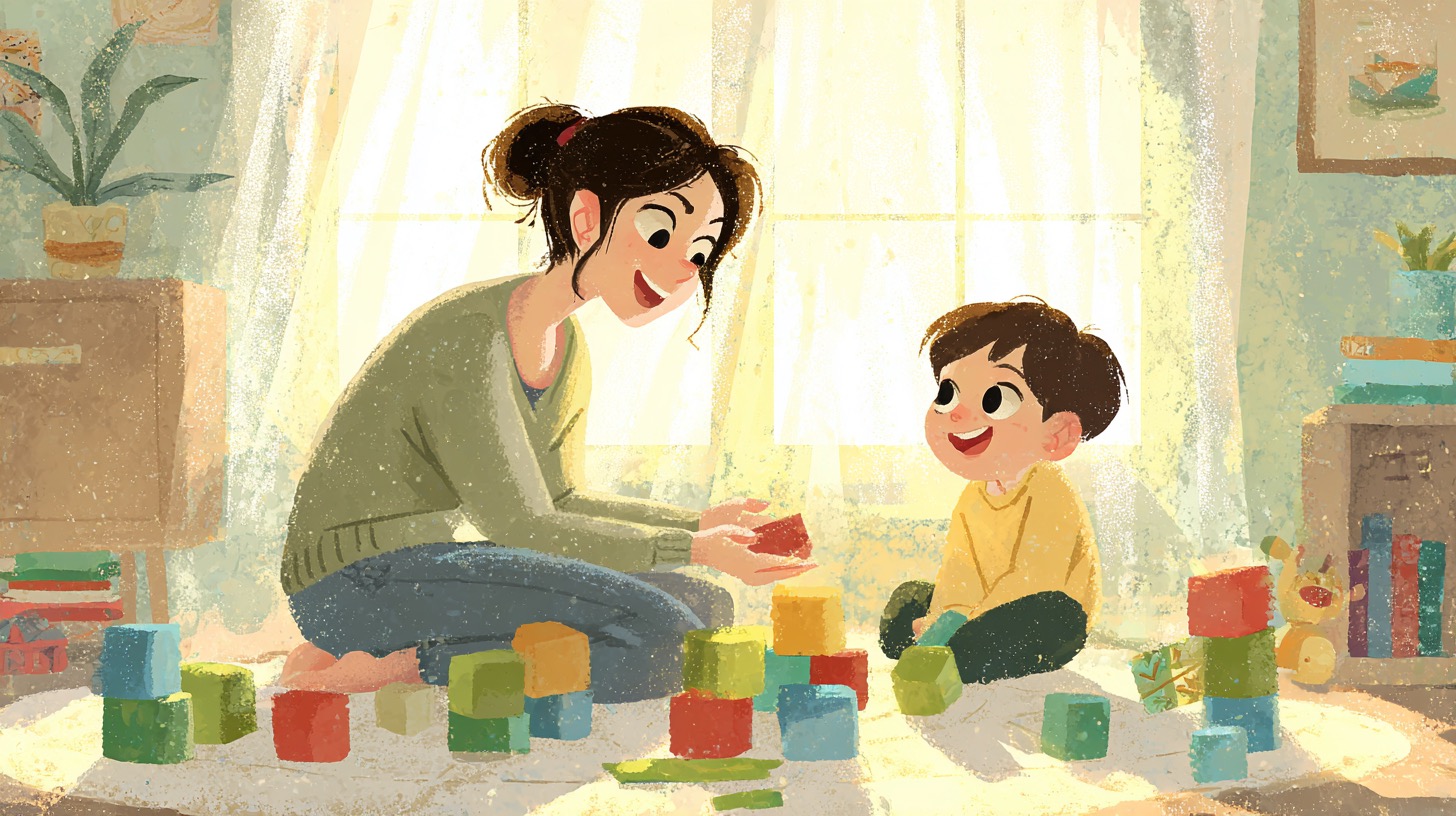
Guided play is more effective than direct instruction for children under 8. Five research-backed activities—alphabet treasure hunts, counting in the kitchen, story building blocks, outdoor exploration, and music & movement—develop creativity, critical thinking, and social-emotional skills while strengthening the parent-child bond. El juego guiado es más efectivo que la instrucción directa para niños menores de 8 años. Cinco actividades respaldadas por investigación—búsqueda del tesoro del alfabeto, contar en la cocina, bloques para historias, exploración al aire libre y música y movimiento—desarrollan creatividad, pensamiento crítico y habilidades socioemocionales. 안내된 놀이는 8세 미만 어린이에게 직접 교육보다 더 효과적입니다. 알파벳 보물찾기, 주방 숫자놀이, 이야기 블록 만들기, 야외 탐험, 음악과 움직임—다섯 가지 연구 기반 활동이 창의성, 비판적 사고, 사회정서적 기술을 키우면서 부모-자녀 유대를 강화합니다.
Research shows that 80% of a child's brain development occurs within the first 1,000 days of life, making early play experiences incredibly important. According to the National Association for the Education of Young Children (NAEYC), play-based learning develops creativity, critical thinking, and social-emotional skills far more effectively than traditional instruction methods.
A recent meta-analysis found that for children under eight, guided play is more effective for teaching academic content than direct instruction. Here are five research-backed activities you can do at home.
1. Alphabet Treasure Hunt
Hide letter cards around your home and have your child find them. As they discover each letter, ask them to name something that starts with it. This activity combines physical movement with cognitive learning.
Why it works: Research shows that children learn best when they are cognitively active, engaged, and when learning is meaningful to their lives. The treasure hunt format taps into children's natural curiosity while building letter recognition and vocabulary.
2. Counting Kitchen
Turn cooking time into math time! Ask your child to count ingredients ("Can you give me 5 strawberries?"), measure cups, and identify shapes ("What shape is this cracker?").
Why it works: Sensory-rich activities engage multiple learning pathways. The kitchen provides hands-on experiences that connect abstract math concepts to real-world applications, making learning more meaningful and memorable.
3. Story Building Blocks
Use building blocks to create scenes from favorite stories, then encourage your child to retell the story or create a new one. Ask questions like "What happens next?" or "How does the character feel?"
Why it works: Imaginative play allows children to explore symbolic thinking and self-expression. Studies show this type of play develops narrative skills, emotional intelligence, and creativity while strengthening the parent-child bond.
4. Outdoor Exploration Hunt
Create a simple checklist of items to find outdoors: different colors, textures (smooth, rough, soft), or shapes. Let your child lead the exploration while you follow their curiosity.
Why it works: A longitudinal Australian study found that 1-5 hours of active, unstructured play per day predicted significantly stronger self-regulation skills. Outdoor play enhances creativity, problem-solving, memory, and attention span while reducing screen dependency.
5. Music and Movement
Play different types of music and encourage your child to move accordingly—slow music means slow movements, fast music means dancing! Sing songs together and add hand motions.
Why it works: Repetition in songs and rhymes encourages long-term memory formation. The patterns are easier for young minds to follow, and songs with associated actions help children learn to react to cues while developing body awareness.
Tips for Maximum Impact
- Let your child lead: Children learn best when they're interested. Follow their curiosity.
- Include language: The more conversation you include, the stronger the cognitive engagement.
- Be present: Your engaged participation is the most important ingredient in any activity.
- Make it fun: When children enjoy an activity, they learn more effectively and want to repeat it.
According to UNICEF, approximately 75% of brain architecture is built during the first five years of life (UNICEF, 2022), reinforcing why these play-based activities matter so much during early childhood. The Harvard Center on the Developing Child further emphasizes that responsive "serve and return" interactions during play build the neural connections that form the foundation for all future learning.
Suggested Reading
- Best Learning Content for Ages 2-4 — Age-appropriate activities matched to developmental stages
- Learning English Through Kids' Songs — How music enhances play-based learning
- Weekend Family Activity Ideas — More hands-on activities for the whole family
- Explore KidsFunLab Songs — Educational songs perfect for music and movement play
Remember, the goal isn't perfection—it's connection. Every moment of engaged play builds your child's brain while strengthening your relationship. Have fun learning together!
Las investigaciones demuestran que el 80% del desarrollo cerebral de un niño ocurre en los primeros 1,000 días de vida, lo que hace que las experiencias de juego temprano sean increíblemente importantes. Según la Asociación Nacional para la Educación de Niños Pequeños (NAEYC), el aprendizaje basado en el juego desarrolla la creatividad, el pensamiento crítico y las habilidades socioemocionales de manera mucho más efectiva que los métodos de instrucción tradicionales.
Un meta-análisis reciente encontró que para niños menores de ocho años, el juego guiado es más efectivo para enseñar contenido académico que la instrucción directa. Aquí hay cinco actividades respaldadas por la investigación que puedes hacer en casa.
1. Búsqueda del Tesoro del Alfabeto
Esconde tarjetas con letras por tu casa y pide a tu hijo que las encuentre. Cuando descubra cada letra, pídele que nombre algo que empiece con ella.
Por qué funciona: Las investigaciones muestran que los niños aprenden mejor cuando están cognitivamente activos, comprometidos y cuando el aprendizaje es significativo para sus vidas.
2. Cocina Matemática
¡Convierte el tiempo de cocina en tiempo de matemáticas! Pide a tu hijo que cuente ingredientes, mida tazas e identifique formas en la cocina.
Por qué funciona: Las actividades ricas en estímulos sensoriales involucran múltiples vías de aprendizaje, conectando conceptos abstractos con aplicaciones del mundo real.
3. Bloques para Construir Historias
Usa bloques de construcción para crear escenas de historias favoritas, luego anima a tu hijo a recontar la historia o crear una nueva.
Por qué funciona: El juego imaginativo permite a los niños explorar el pensamiento simbólico y la autoexpresión, desarrollando habilidades narrativas e inteligencia emocional.
4. Exploración al Aire Libre
Crea una lista simple de elementos para encontrar al aire libre: diferentes colores, texturas o formas. Deja que tu hijo lidere la exploración.
Por qué funciona: Un estudio longitudinal australiano encontró que 1-5 horas de juego activo al aire libre por día predijo habilidades de autorregulación significativamente más fuertes.
5. Música y Movimiento
Pon diferentes tipos de música y anima a tu hijo a moverse según corresponda. ¡Canten canciones juntos y agreguen movimientos de manos!
Por qué funciona: La repetición en canciones y rimas fomenta la formación de memoria a largo plazo, y los patrones son más fáciles de seguir para las mentes jóvenes.
Consejos para Máximo Impacto
- Deja que tu hijo lidere: Los niños aprenden mejor cuando están interesados.
- Incluye lenguaje: Mientras más conversación incluyas, más fuerte será el compromiso cognitivo.
- Está presente: Tu participación comprometida es el ingrediente más importante.
Según UNICEF, aproximadamente el 75% de la arquitectura cerebral se construye durante los primeros cinco años de vida (UNICEF, 2022), reforzando por qué estas actividades basadas en el juego son tan importantes durante la primera infancia. El Centro de Desarrollo Infantil de Harvard enfatiza que las interacciones "servir y devolver" durante el juego construyen las conexiones neuronales que forman la base de todo aprendizaje futuro.
Lecturas Relacionadas
- Mejor Contenido de Aprendizaje para Niños de 2-4 Años
- Aprender Inglés con Canciones Infantiles
- Ideas de Actividades Familiares para el Fin de Semana
- Explora las Canciones de KidsFunLab
Recuerda, el objetivo no es la perfección, es la conexión. ¡Diviértanse aprendiendo juntos!
연구에 따르면 아이 뇌 발달의 80%가 생후 1,000일 내에 이루어집니다. 이는 초기 놀이 경험이 매우 중요하다는 것을 의미합니다. 미국유아교육협회(NAEYC)에 따르면, 놀이 기반 학습은 전통적인 교육 방법보다 창의성, 비판적 사고, 사회-정서적 기술을 훨씬 더 효과적으로 발달시킵니다.
최근 메타 분석에 따르면 8세 미만 어린이에게 안내된 놀이가 직접 교육보다 학습 효과가 더 높습니다. 집에서 할 수 있는 연구 기반 5가지 활동을 소개합니다.
1. 알파벳 보물찾기
집 곳곳에 글자 카드를 숨기고 아이가 찾게 하세요. 각 글자를 발견할 때마다 그 글자로 시작하는 것을 말해보게 하세요.
효과적인 이유: 연구에 따르면 아이들은 인지적으로 활발하고, 몰입하며, 학습이 자신의 삶과 연결될 때 가장 잘 배웁니다. 보물찾기 형식은 아이의 자연스러운 호기심을 자극하면서 글자 인식과 어휘력을 키워줍니다.
2. 수학 요리 시간
요리 시간을 수학 시간으로 바꿔보세요! "딸기 5개 줄 수 있어?", "이 과자는 무슨 모양이야?" 등 질문하며 재료를 세고, 컵을 측정하고, 모양을 찾아보게 하세요.
효과적인 이유: 감각이 풍부한 활동은 여러 학습 경로를 활성화합니다. 주방은 추상적인 수학 개념을 실제 생활과 연결하는 실습 경험을 제공합니다.
3. 이야기 블록 쌓기
블록으로 좋아하는 이야기의 장면을 만들고, 아이가 이야기를 다시 들려주거나 새로운 이야기를 만들도록 격려하세요. "다음에 무슨 일이 일어날까?", "주인공 기분이 어떨까?" 같은 질문을 해보세요.
효과적인 이유: 상상 놀이는 아이들이 상징적 사고와 자기 표현을 탐색하게 합니다. 이런 유형의 놀이는 서사 능력, 감성 지능, 창의성을 발달시키면서 부모-자녀 유대감을 강화합니다.
4. 야외 탐험 놀이
야외에서 찾을 항목의 간단한 체크리스트를 만드세요: 다양한 색깔, 질감(매끄러운, 거친, 부드러운), 모양 등. 아이가 탐험을 이끌고 부모는 아이의 호기심을 따라가세요.
효과적인 이유: 호주의 종단 연구에 따르면 하루 1-5시간의 활동적이고 자유로운 놀이가 자기 조절 능력을 크게 향상시킵니다. 야외 놀이는 창의성, 문제 해결 능력, 기억력, 집중력을 높이면서 스크린 의존도를 줄입니다.
5. 음악과 움직임
다양한 종류의 음악을 틀고 아이가 음악에 맞춰 움직이도록 격려하세요. 느린 음악은 느린 움직임, 빠른 음악은 춤을! 함께 노래하고 손동작을 추가하세요.
효과적인 이유: 노래와 동요의 반복은 장기 기억 형성을 촉진합니다. 패턴은 어린 마음이 따라가기 쉽고, 동작이 있는 노래는 아이들이 신호에 반응하는 법을 배우면서 신체 인식을 발달시킵니다.
최대 효과를 위한 팁
- 아이가 이끌게 하세요: 아이들은 관심 있을 때 가장 잘 배웁니다. 아이의 호기심을 따라가세요.
- 대화를 포함하세요: 대화가 많을수록 인지적 참여가 강해집니다.
- 함께하세요: 부모의 적극적인 참여가 어떤 활동에서든 가장 중요한 요소입니다.
- 재미있게 하세요: 아이가 활동을 즐기면 더 효과적으로 배우고 반복하고 싶어합니다.
유니세프(UNICEF)에 따르면 뇌 구조의 약 75%가 생후 5년 이내에 형성됩니다(UNICEF, 2022). 이는 이러한 놀이 기반 활동이 유아기에 왜 그토록 중요한지를 보여줍니다. 하버드 아동발달센터는 놀이 중 반응적인 "주고받기" 상호작용이 미래 모든 학습의 기초가 되는 신경 연결을 구축한다고 강조합니다.
관련 글 읽기
- 2-4세를 위한 최적의 학습 콘텐츠 — 발달 단계에 맞춘 연령별 활동
- 동요로 배우는 영어 — 음악이 놀이 기반 학습을 어떻게 강화하는지
- 주말 가족 활동 아이디어 — 온 가족이 함께하는 체험 활동
- KidsFunLab 동요 둘러보기 — 음악과 움직임 놀이에 딱 맞는 교육 동요
목표는 완벽함이 아니라 연결입니다. 함께 노는 모든 순간이 아이의 뇌를 발달시키고 관계를 강화합니다. 함께 즐겁게 배워보세요!

Comments Comentarios 댓글
No comments yet. Be the first! Aún no hay comentarios. ¡Sé el primero! 아직 댓글이 없습니다. 첫 번째로 작성해보세요!
Leave a comment Deja un comentario 댓글 남기기