

Tips and insights for parents and kids Consejos e ideas para padres e hijos 부모와 아이를 위한 팁과 인사이트
Boosting Focus Skills for Ages 5-7 Mejorando las Habilidades de Concentración para Niños de 5-7 Años 5-7세 아이의 집중력 향상 팁
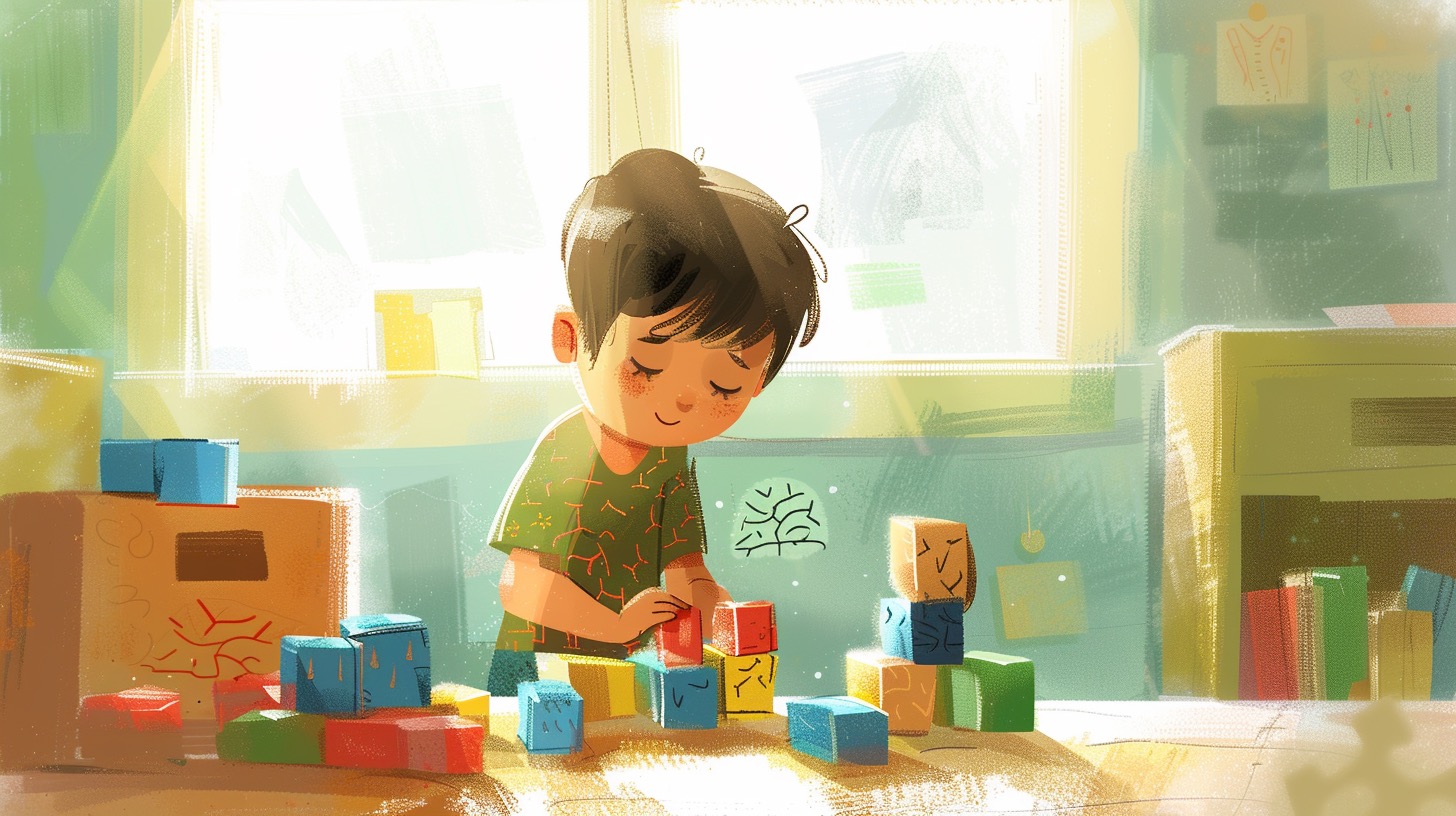
Children rated one standard deviation higher on attention at age 4 had 48.7% greater odds of completing college by age 25. Focus is a trainable skill that develops rapidly between ages 5-7. Research-backed activities include fast-moving ball games, Simon Says, martial arts, aerobic exercise, and board games. Executive function predicts academic outcomes beyond IQ alone. Los niños calificados una desviación estándar más alta en atención a los 4 años tuvieron 48.7% más probabilidades de completar la universidad a los 25. La concentración es una habilidad entrenable que se desarrolla rápidamente entre los 5-7 años. Actividades respaldadas: juegos de pelota, Simón Dice, artes marciales, ejercicio aeróbico y juegos de mesa. 4세 때 주의력이 1표준편차 높은 아이는 25세에 대학 졸업 확률이 48.7% 더 높았습니다. 집중력은 5-7세에 전두엽 피질 성숙과 함께 빠르게 발달하는 훈련 가능한 기술입니다. 연구 기반 활동: 공놀이, 시몬 세즈, 무술, 유산소 운동, 보드게임. 실행 기능은 IQ를 넘어 학업 성과를 예측합니다.
As children enter school age (5-7 years), the ability to focus becomes crucial for academic success. Research shows that children who were rated one standard deviation higher on attention span-persistence at age 4 had 48.7% greater odds of completing college by age 25. The good news? Focus is like a muscle that grows stronger with practice, and there are evidence-based ways to help your child develop this vital skill.
Understanding Your Child's Brain
Neuroscience research shows that the prefrontal cortex—the brain region responsible for executive function (which includes focus, working memory, and self-control)—develops rapidly during childhood and continues maturing into early adulthood. Between ages 5 and 7, significant changes occur:
- Age 5: Children can typically focus for 10-25 minutes on engaging tasks
- Age 6: Focus extends to approximately 12-30 minutes
- Age 7: Attention span reaches 14-35 minutes for interesting activities
Researchers have found that 5-year-olds can adapt to changing rules in card games, while 3-year-olds typically struggle—demonstrating how rapidly these skills develop during early childhood.
Executive Function: The Key to Focus
Focus is part of a broader set of skills called "executive functions" (EF). Research published in PMC found that EF predicts educational outcomes over and above measures of intelligence. Children with better self-control at ages 3-11 tend to have better health, earn more, and commit fewer crimes 30 years later—controlling for IQ, gender, and social class.
Research-Backed Activities That Build Focus
Fast-Moving Ball Games: Games like four square, dodgeball, and tetherball require constant monitoring, rule following, quick decision-making, and self-control—all components of attention.
Simon Says: This classic game is excellent for attention, inhibition, and cognitive flexibility. Children must track which rule to apply and switch actions appropriately.
Martial Arts: Research found that when children in kindergarten through fifth grade were randomly assigned to traditional tae kwon do versus standard PE, those in tae kwon do improved more in working memory and all dimensions of inhibitory control.
Aerobic Exercise: Studies showed that when 7-9 year-olds received 2 hours of fitness training daily (70 minutes aerobic activities plus motor skill development), they showed more improvement in working memory than controls.
Board Games and Card Games: Games requiring turn-taking, rule-following, and strategic thinking naturally build attention skills. Look for games that match your child's current abilities but provide appropriate challenge.
Puzzles and Building Projects: Start with simpler challenges and gradually increase difficulty. The key is finding the "sweet spot"—challenging enough to be engaging but not so hard it causes frustration.
Mindfulness and Focus
Research shows diverse activities improve children's executive functions—including mindfulness practices. Simple breathing exercises or "mindful moments" can help children learn to direct and maintain attention.
Creating a Focus-Friendly Environment
- Minimize distractions: Research shows screen time is related to less stimulation of executive functions and greater attention load
- Create a dedicated learning space: Consistent environments signal to the brain it's time to focus
- Take regular breaks: Young brains need rest to consolidate learning
- Ensure physical needs are met: Hunger, fatigue, and discomfort significantly impact attention
A Surprising Finding
Interestingly, 2024 research published in Psychological Science found that children's limited ability to focus could actually enhance their ability to remember information that adults ignore. Children learned information equally well whether asked to focus on it or do something else entirely—suggesting they absorb like sponges regardless of directed attention.
Tips for Parents
- Start early: Children with worse EF initially benefit most from training, potentially preventing widening achievement gaps
- Practice consistently: Central to all effective interventions is repeated practice and constantly challenging executive functions
- Address the whole child: To improve EF, focusing narrowly on attention may be less effective than also addressing emotional, social development, and physical fitness
- Celebrate effort: Progress takes time—acknowledge small improvements
Diamond and Lee (2011) found that executive function is a stronger predictor of school readiness than IQ, and Posner and Rothbart's research demonstrates that attention networks are highly trainable during ages 4-7—making this the ideal window for building focus skills through structured activities and play.
Suggested Reading
- Interactive Learning Games for Kids — Games that build focus and problem-solving skills
- Managing Screen Time for Kids — Balance screen use to protect attention development
- Fun Educational Play Activities — Offline activities that strengthen focus
KidsFunLab's activities are designed with these research principles in mind—offering age-appropriate challenges that build focus while keeping children engaged and motivated!
A medida que los niños entran en edad escolar (5-7 años), la capacidad de concentrarse se vuelve crucial para el éxito académico. Las investigaciones muestran que los niños con mayor persistencia de atención a los 4 años tenían un 48.7% más de probabilidades de completar la universidad a los 25 años. La buena noticia es que la concentración es como un músculo que se fortalece con la práctica.
Entendiendo el Cerebro de Tu Hijo
La investigación en neurociencia muestra que la corteza prefrontal—la región del cerebro responsable de la función ejecutiva—se desarrolla rápidamente durante la infancia. Entre los 5 y 7 años ocurren cambios significativos:
- 5 años: Pueden concentrarse típicamente por 10-25 minutos
- 6 años: La concentración se extiende a aproximadamente 12-30 minutos
- 7 años: El período de atención alcanza 14-35 minutos
Función Ejecutiva: La Clave de la Concentración
La investigación encontró que la función ejecutiva predice los resultados educativos más allá de las medidas de inteligencia. Los niños con mejor autocontrol a los 3-11 años tienden a tener mejor salud, ganar más y cometer menos delitos 30 años después.
Actividades Respaldadas por la Investigación
Juegos de Pelota Rápidos: Juegos como cuatro esquinas requieren monitoreo constante, seguimiento de reglas y autocontrol.
Simón Dice: Este juego clásico es excelente para la atención, la inhibición y la flexibilidad cognitiva.
Artes Marciales: La investigación encontró que los niños en tae kwon do mejoraron más en memoria de trabajo y control inhibitorio que los de educación física estándar.
Ejercicio Aeróbico: Los estudios mostraron que los niños de 7-9 años con entrenamiento físico diario mostraron más mejora en la memoria de trabajo.
Creando un Ambiente Favorable
- Minimiza las distracciones: El tiempo de pantalla está relacionado con menos estimulación de funciones ejecutivas
- Crea un espacio dedicado: Los ambientes consistentes señalan al cerebro que es hora de concentrarse
- Toma descansos regulares: Los cerebros jóvenes necesitan descanso
Consejos para Padres
- Comienza temprano: Los niños con peor FE se benefician más del entrenamiento
- Practica consistentemente: La práctica repetida es central para todas las intervenciones efectivas
- Aborda al niño completo: Enfocarse solo en la atención puede ser menos efectivo que también abordar el desarrollo emocional, social y físico
Diamond y Lee (2011) encontraron que la función ejecutiva es un predictor más fuerte de la preparación escolar que el CI, y la investigación de Posner y Rothbart demuestra que las redes de atención son altamente entrenables entre los 4 y 7 años—haciendo de esta la ventana ideal para construir habilidades de concentración.
Lecturas Relacionadas
¡Las actividades de KidsFunLab están diseñadas con estos principios de investigación en mente!
아이들이 학령기(5-7세)에 접어들면서 집중력은 학업 성공에 매우 중요해집니다. 연구에 따르면 4세 때 주의력 지속성이 1 표준편차 높게 평가된 아이들은 25세에 대학을 졸업할 확률이 48.7% 더 높았습니다. 좋은 소식은 집중력은 연습으로 강해지는 근육과 같다는 것입니다.
아이의 뇌 이해하기
신경과학 연구에 따르면 집행 기능(집중력, 작업 기억, 자기 통제 포함)을 담당하는 뇌 영역인 전두엽 피질은 아동기에 빠르게 발달하며 초기 성인기까지 계속 성숙합니다. 5-7세 사이에 중요한 변화가 일어납니다:
- 5세: 일반적으로 흥미로운 작업에 10-25분 집중 가능
- 6세: 집중력이 약 12-30분으로 확장
- 7세: 주의 지속 시간이 14-35분에 도달
연구자들은 5세 아이들이 카드 게임에서 변경되는 규칙에 적응할 수 있는 반면, 3세 아이들은 일반적으로 어려움을 겪는다는 것을 발견했습니다—이는 초기 아동기에 이러한 기술이 얼마나 빠르게 발달하는지를 보여줍니다.
집행 기능: 집중력의 핵심
집중력은 "집행 기능"(EF)이라는 더 넓은 기술 세트의 일부입니다. PMC에 발표된 연구에 따르면 EF는 지능 측정을 넘어 교육 결과를 예측합니다. 3-11세에 자기 통제가 더 좋았던 아이들은 IQ, 성별, 사회적 계층을 통제한 후에도 30년 후 더 나은 건강, 더 높은 수입, 더 적은 범죄율을 보이는 경향이 있습니다.
연구 기반 집중력 향상 활동
빠르게 움직이는 공 게임: 피구, 사방치기 같은 게임은 지속적인 모니터링, 규칙 준수, 빠른 의사 결정, 자기 통제를 필요로 합니다—모두 주의력의 구성 요소입니다.
사이먼 세즈(무궁화 꽃이 피었습니다): 이 고전 게임은 주의력, 억제력, 인지적 유연성에 탁월합니다. 아이들은 어떤 규칙을 적용할지 추적하고 적절하게 행동을 전환해야 합니다.
무술: 연구에 따르면 유치원부터 초등학교 5학년 아이들이 전통 태권도와 일반 체육 수업에 무작위로 배정되었을 때, 태권도 그룹이 작업 기억과 억제 통제의 모든 차원에서 더 많이 향상되었습니다.
유산소 운동: 연구에 따르면 7-9세 아이들이 매일 2시간의 체력 훈련(70분 유산소 활동과 운동 기술 발달)을 받았을 때, 대조군보다 작업 기억에서 더 많은 향상을 보였습니다.
보드 게임과 카드 게임: 차례 지키기, 규칙 따르기, 전략적 사고를 요구하는 게임은 자연스럽게 주의력을 키웁니다.
퍼즐과 만들기 프로젝트: 간단한 도전으로 시작하여 점차 난이도를 높이세요. 핵심은 "스위트 스팟"을 찾는 것입니다—참여를 유도할 만큼 도전적이지만 좌절감을 유발할 정도로 어렵지 않게.
마음 챙김과 집중력
연구에 따르면 마음 챙김 훈련을 포함한 다양한 활동이 아이들의 집행 기능을 향상시킵니다. 간단한 호흡 운동이나 "마음 챙김 순간"은 아이들이 주의를 집중하고 유지하는 법을 배우는 데 도움이 됩니다.
집중하기 좋은 환경 만들기
- 방해 요소 최소화: 연구에 따르면 스크린 타임은 집행 기능의 자극 감소 및 더 큰 주의 부하와 관련이 있습니다
- 전용 학습 공간 만들기: 일관된 환경은 뇌에 집중할 시간이라는 신호를 보냅니다
- 정기적인 휴식 취하기: 어린 뇌는 학습을 통합하기 위해 휴식이 필요합니다
- 신체적 필요 충족: 배고픔, 피로, 불편함은 주의력에 큰 영향을 미칩니다
놀라운 발견
흥미롭게도, 2024년 Psychological Science에 발표된 연구에 따르면 아이들의 제한된 집중 능력이 실제로 어른들이 무시하는 정보를 기억하는 능력을 향상시킬 수 있습니다. 아이들은 집중하라고 요청받든 다른 일을 하라고 요청받든 정보를 똑같이 잘 배웠습니다—이는 아이들이 의도적인 주의와 관계없이 스펀지처럼 흡수한다는 것을 시사합니다.
부모를 위한 팁
- 일찍 시작하세요: 처음에 EF가 더 낮은 아이들이 훈련에서 가장 많은 혜택을 받아, 잠재적으로 성취도 격차 확대를 방지합니다
- 꾸준히 연습하세요: 모든 효과적인 중재의 핵심은 반복 연습과 지속적으로 집행 기능에 도전하는 것입니다
- 전인적으로 접근하세요: EF를 향상시키려면 주의력에만 좁게 초점을 맞추는 것보다 정서적, 사회적 발달과 체력도 함께 다루는 것이 더 효과적일 수 있습니다
- 노력을 축하하세요: 발전에는 시간이 걸립니다—작은 개선을 인정하세요
Diamond과 Lee(2011)는 집행 기능이 IQ보다 학교 준비도의 더 강력한 예측 변수라는 것을 발견했으며, Posner와 Rothbart의 연구는 주의력 네트워크가 4-7세에 매우 높은 훈련 가능성을 보인다는 것을 입증합니다—이 시기가 구조화된 활동과 놀이를 통해 집중력을 키우기에 이상적인 시기입니다.
관련 글 읽기
- 인터랙티브 학습 게임 — 집중력과 문제 해결 능력을 키우는 게임
- 아이의 스크린 타임 관리법 — 주의력 발달을 위한 스크린 사용 균형
- 재미있는 교육적 놀이 활동 — 집중력을 강화하는 오프라인 활동
KidsFunLab의 활동은 이러한 연구 원칙을 염두에 두고 설계되어, 아이들을 참여시키고 동기를 부여하면서 집중력을 키우는 연령에 적합한 도전을 제공합니다!

Comments Comentarios 댓글
No comments yet. Be the first! Aún no hay comentarios. ¡Sé el primero! 아직 댓글이 없습니다. 첫 번째로 작성해보세요!
Leave a comment Deja un comentario 댓글 남기기