

Tips and insights for parents and kids Consejos e ideas para padres e hijos 부모와 아이를 위한 팁과 인사이트
The Power of Interactive Learning Games El Poder de los Juegos de Aprendizaje Interactivos 인터랙티브 학습 게임의 힘
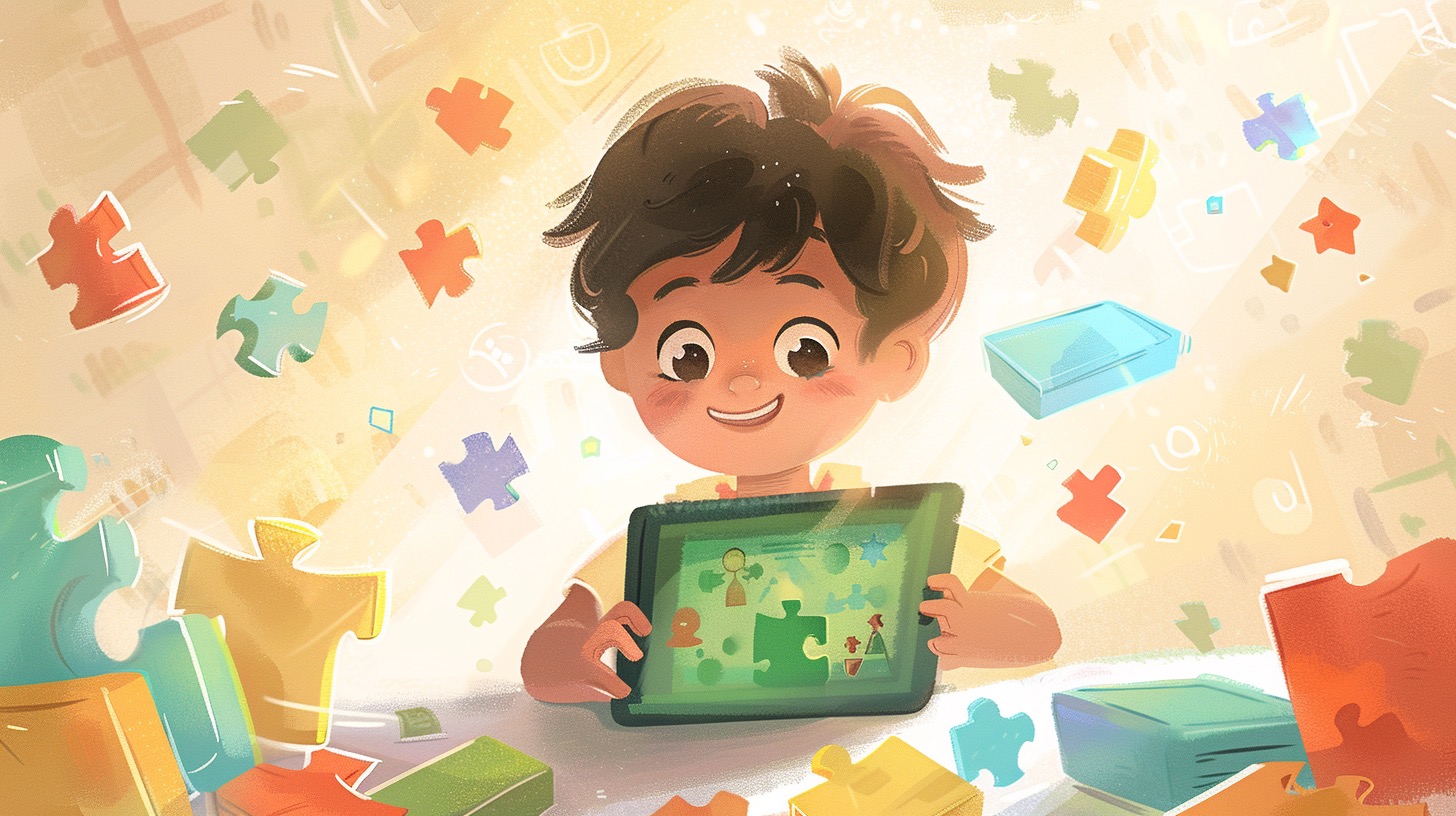
Research confirms game-based learning has a moderate to large positive effect on children's cognitive, social, and emotional development. A meta-analysis (2008-2023) found a Hedges's g of 0.782 for gamification's impact on academic performance. The key is choosing games with immediate feedback, adaptive difficulty, and active discovery—not passive content consumption. La investigación confirma que el aprendizaje basado en juegos tiene un efecto positivo moderado a grande en el desarrollo cognitivo, social y emocional de los niños. Un meta-análisis (2008-2023) encontró un Hedges's g de 0.782 para el impacto en rendimiento académico. La clave es elegir juegos con retroalimentación inmediata, dificultad adaptativa y descubrimiento activo. 연구에 따르면 게임 기반 학습은 아이의 인지, 사회, 정서 발달에 중간~큰 긍정적 효과가 있습니다. 2008-2023년 메타분석에서 게임화의 학업 성과 효과 크기는 Hedges's g 0.782로 나타났습니다. 핵심은 즉각적 피드백, 적응형 난이도, 능동적 발견을 제공하는 게임을 선택하는 것입니다.
Interactive learning games aren't just entertaining—they're backed by extensive research showing they can transform how children learn. A 2024 systematic review and meta-analysis published in Frontiers in Psychology found that game-based learning has a moderate to large effect on cognitive, social, emotional, motivation, and engagement outcomes in early childhood education.
What the Research Says
A comprehensive meta-analysis examining studies from 2008-2023 revealed a moderately positive effect (Hedges's g = 0.782) of gamification on student academic performance. Studies show that well-designed educational games can improve learning outcomes by:
- Promoting critical thinking and problem-solving skills
- Fostering collaborative learning opportunities
- Catering to diverse learning styles and paces
- Creating inclusive learning environments
Why Interactive Games Work: The Science
Immediate Feedback: One of the most powerful features of educational games is instant, contextualized feedback. Apps can provide immediate feedback to students, allowing them to spot errors and correct them right away. This builds a growth mindset and reinforces learning in real-time.
The "Flow State": Well-designed games continuously adjust their difficulty to match the player's skill level, keeping them in what psychologists call the "flow state"—a perfect balance between challenge and ability. This means each learner receives a personalized experience tailored to their current understanding.
Active Discovery: Unlike passive content consumption, games engage children in active discovery. Research consistently shows that active learning leads to better retention and understanding than passive observation.
Adaptive Learning: Modern educational games use adaptive technology to customize the experience. This individualized approach ensures that all children can achieve success and gain confidence.
Types of Learning Games and Their Benefits
Puzzle and Problem-Solving Games: Develop spatial awareness, logical thinking, and persistence. Children learn to approach challenges systematically and celebrate solving difficult problems.
Memory and Matching Games: Strengthen working memory, pattern recognition, and concentration. These foundational skills support learning across all subjects.
Literacy Games: Research shows that game-based literacy apps can effectively support young children from all backgrounds in early literacy skill acquisition. Look for games with letter recognition, phonics, and vocabulary building.
Math and Number Games: Studies found that digital game formats including mini games and educational apps promote cognitive development in numeric skills particularly well.
Creative and Open-Ended Games: Simulation and creative games allow children to explore, experiment safely, and express themselves—building creativity and imagination.
Maximizing Learning Through Games
- Play alongside your child: Research shows educational apps that children and adults engage in together have greater long-term effects than apps children use alone
- Connect to real life: If your child plays a counting game, practice counting at the grocery store. Transfer makes learning stick.
- Celebrate effort, not just completion: Praise the process of problem-solving, not just getting the right answer
- Choose quality over quantity: Look for games with clear learning goals, appropriate difficulty progression, and minimal distractions
- Watch for the right challenge level: Games should be challenging enough to be engaging but not so hard they cause frustration
What Makes a Good Educational Game?
Research identifies key characteristics of effective game-based learning:
- Active learning: The game engages children in discovery, not passive watching
- Meaningful context: Learning is connected to goals children care about
- Immediate feedback: Children know right away how they're doing
- Appropriate difficulty: Challenges match the child's current abilities
- Minimal distractions: Too many bells and whistles can overwhelm cognitive load
Research from MIT Media Lab demonstrates that interactive learning tools increase student engagement by up to 6 times compared to passive content (MIT Media Lab). Furthermore, a Journal of Educational Psychology study found that game-based learning can improve knowledge retention by up to 40% compared to conventional instruction methods (Journal of Educational Psychology, 2019).
Suggested Reading
- Getting Started with KidsFunLab — Set up learning games tailored to your child's age
- Building Focus Skills for Ages 5-7 — How games develop attention and executive function
- Best Learning Content for Ages 2-4 — Game recommendations for toddlers
KidsFunLab features hundreds of interactive learning games designed with these research-backed principles. Every game is created by educational experts to ensure meaningful learning through engaging play!
Los juegos de aprendizaje interactivos no son solo entretenidos—están respaldados por investigaciones extensas que demuestran que pueden transformar cómo aprenden los niños. Una revisión sistemática y meta-análisis de 2024 encontró que el aprendizaje basado en juegos tiene un efecto moderado a grande en los resultados cognitivos, sociales, emocionales, de motivación y compromiso.
Lo Que Dice la Investigación
Un meta-análisis que examinó estudios de 2008-2023 reveló un efecto moderadamente positivo (g de Hedges = 0.782) de la gamificación en el rendimiento académico. Los estudios muestran que los juegos educativos bien diseñados pueden mejorar los resultados de aprendizaje al:
- Promover el pensamiento crítico y las habilidades de resolución de problemas
- Fomentar oportunidades de aprendizaje colaborativo
- Adaptarse a diversos estilos y ritmos de aprendizaje
Por Qué Funcionan los Juegos: La Ciencia
Retroalimentación Inmediata: Las aplicaciones proporcionan retroalimentación inmediata, permitiendo a los estudiantes detectar errores y corregirlos de inmediato.
El "Estado de Flujo": Los juegos bien diseñados ajustan continuamente su dificultad para coincidir con el nivel de habilidad del jugador, manteniéndolos en un equilibrio perfecto entre desafío y capacidad.
Aprendizaje Adaptativo: Los juegos educativos modernos usan tecnología adaptativa para personalizar la experiencia para cada niño.
Tipos de Juegos de Aprendizaje
Juegos de Rompecabezas: Desarrollan conciencia espacial, pensamiento lógico y persistencia.
Juegos de Memoria: Fortalecen la memoria de trabajo y la concentración.
Juegos de Alfabetización: La investigación muestra que las aplicaciones de alfabetización basadas en juegos pueden apoyar efectivamente a los niños pequeños.
Maximizando el Aprendizaje
- Juega junto con tu hijo: La investigación muestra que las aplicaciones que los niños y adultos usan juntos tienen mayores efectos a largo plazo
- Conecta con la vida real: Si tu hijo juega un juego de contar, practica contar en el supermercado
- Celebra el esfuerzo: Elogia el proceso de resolución de problemas, no solo la respuesta correcta
Investigaciones del MIT Media Lab demuestran que las herramientas de aprendizaje interactivo aumentan la participación de los estudiantes hasta 6 veces en comparación con el contenido pasivo (MIT Media Lab). Además, un estudio del Journal of Educational Psychology encontró que el aprendizaje basado en juegos puede mejorar la retención de conocimientos hasta un 40% (Journal of Educational Psychology, 2019).
Lecturas Relacionadas
- Comenzando con KidsFunLab
- Habilidades de Concentración para 5-7 Años
- Contenido de Aprendizaje para 2-4 Años
¡KidsFunLab presenta cientos de juegos de aprendizaje interactivos diseñados con estos principios respaldados por la investigación!
인터랙티브 학습 게임은 단순히 재미있는 것이 아니라, 아이들의 학습 방식을 변화시킬 수 있다는 광범위한 연구로 뒷받침됩니다. 2024년 Frontiers in Psychology에 발표된 체계적 검토 및 메타 분석에 따르면 게임 기반 학습은 유아 교육에서 인지적, 사회적, 정서적, 동기 부여 및 참여 결과에 중간에서 큰 효과가 있습니다.
연구 결과
2008-2023년 연구를 검토한 종합적인 메타 분석에서 게임화가 학생의 학업 성과에 중간 정도의 긍정적 효과(Hedges's g = 0.782)가 있음을 밝혔습니다. 연구에 따르면 잘 설계된 교육 게임은 다음을 통해 학습 결과를 향상시킬 수 있습니다:
- 비판적 사고와 문제 해결 능력 촉진
- 협력 학습 기회 조성
- 다양한 학습 스타일과 속도에 적응
- 포용적인 학습 환경 조성
인터랙티브 게임이 효과적인 이유: 과학적 근거
즉각적인 피드백: 교육 게임의 가장 강력한 기능 중 하나는 즉각적이고 맥락화된 피드백입니다. 앱은 학생들에게 즉각적인 피드백을 제공하여 오류를 즉시 발견하고 수정할 수 있게 합니다. 이것은 성장 마인드셋을 구축하고 실시간으로 학습을 강화합니다.
"몰입 상태": 잘 설계된 게임은 플레이어의 기술 수준에 맞게 난이도를 지속적으로 조정하여, 심리학자들이 "몰입 상태"라고 부르는 도전과 능력 사이의 완벽한 균형을 유지합니다. 이는 각 학습자가 현재 이해도에 맞춘 개인화된 경험을 받는다는 것을 의미합니다.
능동적 발견: 수동적인 콘텐츠 소비와 달리, 게임은 아이들을 능동적인 발견에 참여시킵니다. 연구는 일관되게 능동적 학습이 수동적 관찰보다 더 나은 기억과 이해로 이어진다는 것을 보여줍니다.
적응형 학습: 현대 교육 게임은 적응형 기술을 사용하여 경험을 맞춤화합니다. 이 개인화된 접근 방식은 모든 아이들이 성공을 달성하고 자신감을 얻을 수 있도록 보장합니다.
학습 게임의 종류와 효과
퍼즐 및 문제 해결 게임: 공간 인식, 논리적 사고, 끈기를 발달시킵니다. 아이들은 체계적으로 도전에 접근하고 어려운 문제를 해결하는 것을 축하하는 법을 배웁니다.
기억력 및 매칭 게임: 작업 기억, 패턴 인식, 집중력을 강화합니다. 이러한 기초 기술은 모든 과목의 학습을 지원합니다.
문해력 게임: 연구에 따르면 게임 기반 문해력 앱은 다양한 배경의 어린 아이들의 초기 문해력 습득을 효과적으로 지원할 수 있습니다. 글자 인식, 파닉스, 어휘 구축이 있는 게임을 찾으세요.
수학 및 숫자 게임: 연구에 따르면 미니 게임과 교육 앱을 포함한 디지털 게임 형식은 특히 수 능력의 인지 발달을 촉진합니다.
게임을 통한 학습 극대화
- 아이와 함께 플레이하세요: 연구에 따르면 아이와 어른이 함께 사용하는 교육 앱은 아이 혼자 사용하는 앱보다 장기적인 효과가 더 큽니다
- 실생활과 연결하세요: 아이가 숫자 세기 게임을 하면, 마트에서 숫자 세기를 연습하세요. 전이가 학습을 고착시킵니다.
- 완료가 아닌 노력을 축하하세요: 정답을 맞추는 것뿐만 아니라 문제 해결 과정을 칭찬하세요
- 양보다 질을 선택하세요: 명확한 학습 목표, 적절한 난이도 진행, 최소한의 산만함이 있는 게임을 찾으세요
- 적절한 도전 수준을 확인하세요: 게임은 참여를 유도할 만큼 도전적이지만 좌절감을 유발할 정도로 어렵지 않아야 합니다
좋은 교육 게임의 조건
연구는 효과적인 게임 기반 학습의 핵심 특성을 식별합니다:
- 능동적 학습: 게임이 아이들을 수동적 시청이 아닌 발견에 참여시킴
- 의미 있는 맥락: 학습이 아이들이 관심을 갖는 목표와 연결됨
- 즉각적인 피드백: 아이들이 자신의 진행 상황을 바로 알 수 있음
- 적절한 난이도: 도전이 아이의 현재 능력에 맞춤
- 최소한의 산만함: 너무 많은 효과는 인지 부하를 과도하게 할 수 있음
MIT 미디어 랩 연구에 따르면 인터랙티브 학습 도구는 수동적 콘텐츠 대비 학생 참여도를 최대 6배 높입니다(MIT Media Lab). 또한 교육심리학 저널(Journal of Educational Psychology) 연구에서는 게임 기반 학습이 기존 교육 방법 대비 지식 유지율을 최대 40% 향상시킬 수 있다고 밝혔습니다(Journal of Educational Psychology, 2019).
관련 글 읽기
- KidsFunLab 시작 가이드 — 아이 연령에 맞는 학습 게임 설정
- 5-7세 집중력 키우기 — 게임이 주의력과 실행 기능을 발달시키는 방법
- 2-4세를 위한 최적의 학습 콘텐츠 — 유아를 위한 게임 추천
KidsFunLab은 이러한 연구 기반 원칙으로 설계된 수백 개의 인터랙티브 학습 게임을 제공합니다. 모든 게임은 교육 전문가가 만들어 재미있는 놀이를 통한 의미 있는 학습을 보장합니다!

Comments Comentarios 댓글
No comments yet. Be the first! Aún no hay comentarios. ¡Sé el primero! 아직 댓글이 없습니다. 첫 번째로 작성해보세요!
Leave a comment Deja un comentario 댓글 남기기